Norse Mythology
About this quiz
This quiz about Norse Mythology features 10 questions. It was generated by one of our users February 15, 2026.
Dive into the World of Norse Mythology
From the frost-covered peaks of ancient Scandinavia comes one of the world's most captivating mythological traditions—Norse mythology. These powerful tales of gods, giants, and heroes emerged from the Viking Age and medieval Iceland, weaving together stories of cosmic battles, divine trickery, and the inevitable twilight of the gods known as Ragnarök. Unlike many mythologies that promise eternal paradise, Norse myths embrace a darker, more complex worldview where even the mightiest gods face destruction, making these stories both haunting and deeply human.
At the heart of these legends stands Asgard, home to the Æsir gods, connected to the mortal realm of Midgard by the rainbow bridge Bifrost. Here we meet unforgettable characters: Odin, the one-eyed All-Father who sacrificed his eye for wisdom; Thor, the thunder god wielding his mighty hammer Mjolnir; Loki, the shape-shifting trickster whose cunning both saves and dooms the gods; and Freyja, the fierce goddess of love and war. These aren't distant, perfect deities—they're flawed beings who struggle with jealousy, make terrible mistakes, and face consequences that echo through the Nine Realms.
What makes Norse mythology endure is its influence on everything from our days of the week (Tuesday through Friday honor Norse gods) to modern pop culture. Ready to test your knowledge of this rich mythological world? Let's see how well you know the gods of Valhalla!
Norse Mythology: A Journey Through Gods, Giants, and Cosmic Wonders
Norse mythology is a rich tapestry of stories, gods, goddesses, heroes, and mythical creatures that formed the belief system of the ancient Norse people. These tales, passed down through oral tradition and later recorded in texts like the Poetic Edda and the Prose Edda, offer profound insights into their worldview, values, and understanding of the cosmos.
Let's delve into some fascinating aspects of this captivating mythology.
The Cosmic Landscape: Realms and Connections
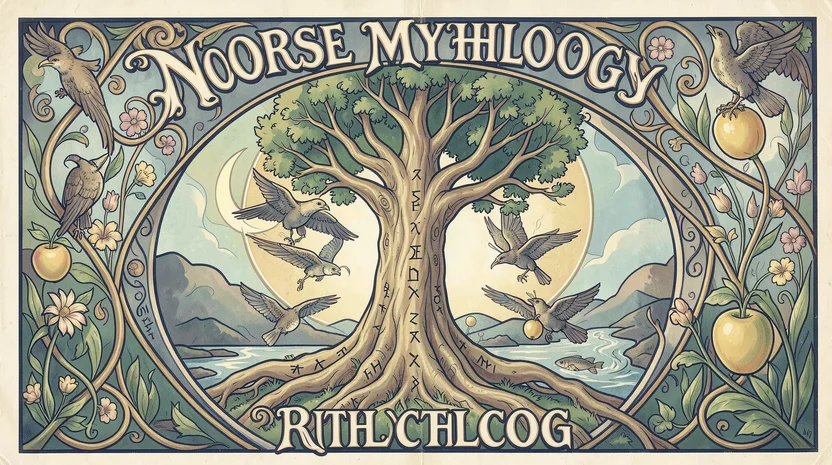
Norse cosmology depicts a universe structured into nine distinct realms, all interconnected by the colossal world tree, Yggdrasil. These realms are home to various beings, from the powerful gods to the formidable giants and the mortal inhabitants of Midgard.
The Celestial Highway: The Rainbow Bridge
One of the most iconic and visually striking elements of Norse cosmology is the bridge that links the realm of humans to the divine abode of the gods.
Question: What is the name of the rainbow bridge that connects Midgard (Earth) to Asgard in Norse mythology?
Answer: The rainbow bridge that connects Midgard (Earth) to Asgard, the realm of the Æsir gods, is called Bifröst.
- Bifröst: This magnificent bridge is not merely a physical structure but a shimmering, vibrant pathway, often described as a rainbow. It is guarded by the vigilant god Heimdall, who possesses keen senses and can hear the grass grow and see for hundreds of miles. Bifröst serves as the primary route for the gods to travel between their home in Asgard and the world of mortals, Midgard. Its luminous nature symbolizes the divine connection and the path to higher realms.
The Pursuit of Wisdom: Sacrifice and Revelation
The Norse gods, despite their power, were not without their struggles and sacrifices. The quest for knowledge and wisdom often came at a great personal cost.
Question: Which Norse god is known for sacrificing his eye to gain wisdom and hanging himself from Yggdrasil for nine days to discover the runes?
Answer: The god renowned for these profound sacrifices is Odin.
- Odin's Sacrifice: Odin, the All-Father and chief deity of the Æsir, is the embodiment of wisdom, war, poetry, and magic. His thirst for knowledge was insatiable.
- The Eye for Wisdom: To gain insight into the deepest mysteries of existence, Odin journeyed to the Well of Mimir, a sacred spring guarded by the wise giant Mimir. For a drink from its waters, Odin was forced to sacrifice one of his eyes. This act of profound self-abnegation granted him unparalleled wisdom and foresight.
- The Hanging for Runes: Odin's quest for the runes, the magical alphabet of the Norse, led him to another extraordinary act of self-sacrifice. He voluntarily hanged himself from the branches of Yggdrasil, the world tree, for nine days and nine nights, pierced by his own spear. This agonizing ordeal was a deliberate act of self-torture, meant to unlock the secrets of the runes. Upon his descent, he gained mastery over them, understanding their power and their ability to influence fate.
- Odin's Sacrifice: Odin, the All-Father and chief deity of the Æsir, is the embodiment of wisdom, war, poetry, and magic. His thirst for knowledge was insatiable.
Trickery and Ingenuity: Loki's Meddling
Loki, the god of mischief and trickery, is a central and often contradictory figure in Norse mythology. His actions, though frequently disruptive and malevolent, sometimes inadvertently lead to the creation of wonders or the resolution of complex problems.
Question: In Norse mythology, what unusual method does Loki use to distract the giant's horse Svaðilfari during the construction of Asgard's wall?
Answer: Loki's unusual and cunning method to distract Svaðilfari, the horse belonging to the giant Hrungnir (though often associated with a unnamed giant in the context of the wall's construction), was to transform himself into a mare and seduce the horse.
- The Giant's Bargain: The gods had agreed to a deal with a giant: if he could complete the construction of a protective wall around Asgard within a certain timeframe, he would win the goddess Freya as his bride. The giant's most valuable asset in this endeavor was his powerful horse, Svaðilfari, who possessed incredible strength and endurance, capable of hauling massive stones.
- Loki's Intervention: As the wall neared completion, and it became clear the giant would succeed, the gods grew desperate. They tasked Loki with sabotaging the construction. In a classic display of his shapeshifting abilities and morally ambiguous nature, Loki transformed into a beautiful mare. He then enticed Svaðilfari away from his work, leading the horse on a chase that distracted him from his duties for the remainder of the construction period. This disruption ultimately prevented the giant from fulfilling his end of the bargain, and he was subsequently slain by Thor.
Engaging with Norse Mythology
Norse mythology offers a fascinating glimpse into the ancient world, filled with epic sagas, complex characters, and profound philosophical ideas. By exploring these stories, we can gain a deeper appreciation for the cultural heritage and the enduring influence of these ancient tales.
Further Exploration:
- Key Deities: Learn more about Odin, Thor, Freya, Frigg, Tyr, and other important figures.
- Mythical Creatures: Discover the world of giants (Jötnar), dwarves (Dvergar), elves (Álfar), and the monstrous wolf Fenrir.
- Major Sagas: Read about the creation myths, Ragnarök (the twilight of the gods), and the adventures of various heroes.
The world of Norse mythology is vast and endlessly intriguing. May your journey through its realms be filled with wonder and discovery!