Pro Wrestling
About this quiz
This quiz about Pro Wrestling features 10 questions. It was generated by one of our users September 7, 2026.
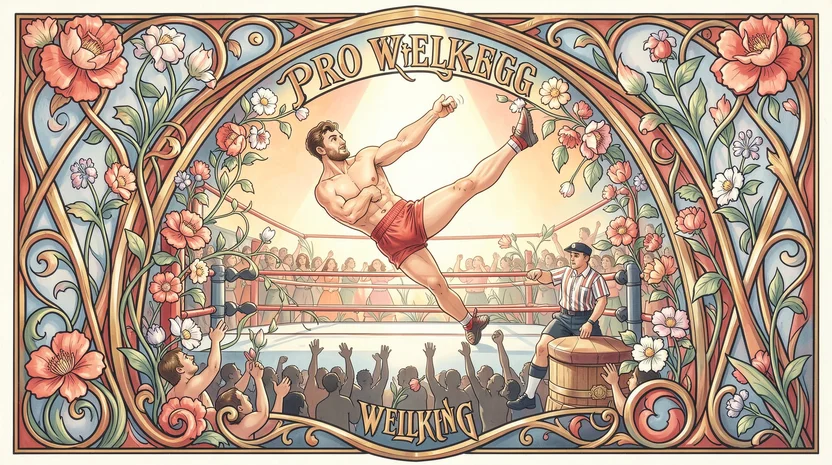
Step into the electrifying world of pro wrestling, where athleticism meets theatricality in a dazzling spectacle of larger-than-life characters and captivating storylines. More than just a sport, professional wrestling is a unique blend of performance art and physical prowess, a meticulously choreographed dance of power, agility, and drama. From the thunderous roars of the crowd to the iconic entrance music that signals the arrival of a wrestling superstar, every element is designed to immerse you in a world of heroes and villains, triumphs and heartbreaks.
This captivating form of entertainment has a rich history, evolving from carnival strongman displays to the global phenomenon it is today. It's a realm where athletes hone their bodies into finely tuned machines, mastering complex maneuvers and delivering breathtaking performances that leave audiences on the edge of their seats. But beyond the physical feats, pro wrestling thrives on its narrative – the epic rivalries, the underdog stories, and the sheer charisma of its performers. Get ready to test your knowledge of this incredible fusion of sport and showmanship, where the drama is always high and the action is always unforgettable.
Pro Wrestling: A Comprehensive Study Guide
Welcome to the fascinating world of professional wrestling! More than just a sport or a theatrical performance, pro wrestling is a unique blend of athleticism, storytelling, and crowd engagement. This study guide aims to provide you with a comprehensive understanding of its history, mechanics, and cultural impact.
Table of Contents
- Introduction: What is Pro Wrestling?
- Defining the Spectacle
- The Illusion and the Reality
- Key Terminology
- A Rich History: From Carnivals to Global Arenas
- The Early Days: Strongmen and Carnivals
- The Golden Age: Golden Age of Wrestling
- The Rise of Television and National Expansion
- The "Attitude Era" and Beyond
- Modern Pro Wrestling: Global Reach and Diverse Styles
- The Art of the Match: Performance and Psychology
- The In-Ring Performance:
- The "Work" vs. The "Shoot"
- Selling and Bumps
- Timing and Pacing
- Signature Moves and Finishers
- The Choreography of Violence
- The Psychology of the Match:
- Face vs. Heel Dynamics
- Building Drama and Suspense
- The Storytelling Arc of a Match
- Crowd Reaction and Interaction
- The In-Ring Performance:
- The Pillars of Pro Wrestling: Characters and Storylines
- Character Development:
- Archetypes and Personas
- Gimmicks and Motivations
- The Importance of Charisma
- Storytelling and Promos:
- The Art of the Promo (Interview)
- Feuds and Rivalries
- Angles and Storylines
- The Role of Authority Figures
- Character Development:
- The Business of Pro Wrestling:
- Promotions and Organizations
- Wrestler Training and Development
- The Financial Model
- Merchandising and Media Rights
- The Impact and Culture of Pro Wrestling:
- Fan Culture and Community
- Influence on Popular Culture
- Criticisms and Controversies
- The Future of Pro Wrestling
- Key Terms and Glossary
- Further Exploration and Resources
1. Introduction: What is Pro Wrestling?
Defining the Spectacle
Professional wrestling, often shortened to "pro wrestling" or simply "wrestling" (though distinct from Olympic wrestling), is a form of athletic entertainment that combines theatrical performance with athletic competition. It features predetermined outcomes, choreographed matches, and exaggerated characters. While the results are not legitimate contests in the traditional sense, the athleticism, physical exertion, and emotional engagement from both performers and the audience are very real.
The Illusion and the Reality
The core of pro wrestling lies in its captivating illusion. Performers, known as wrestlers, engage in staged combat that appears dangerous and intense. However, the "violence" is carefully controlled, with wrestlers trained to perform moves safely and minimize actual harm. This is often referred to as "working" a match.
The "shoot" refers to genuine moments or aspects of wrestling that are not staged, such as genuine injuries, real-life backstage politics, or unfiltered emotions expressed by performers. The brilliance of pro wrestling often lies in blurring the lines between the work and the shoot, making the audience believe in the drama unfolding before them.
Key Terminology
- Work: A staged or predetermined action within a wrestling match or storyline.
- Shoot: A genuine occurrence, emotion, or aspect of professional wrestling that is not scripted.
- Face (or Babyface): A heroic character that the audience is encouraged to cheer for.
- Heel: A villainous character that the audience is encouraged to boo.
- Gimmick: A wrestler's character, persona, and often their costume and mannerisms.
- Promo: A spoken segment where a wrestler addresses the audience, discusses their motivations, or builds a feud.
- Bump: The act of falling or being thrown to the mat in a way that appears impactful. Wrestlers are trained to take bumps safely.
- Selling: A wrestler's exaggerated reaction to an opponent's offense, making the moves appear more damaging and impactful.
- Finisher: A wrestler's signature move, often used to end a match.
- Indie Wrestling: Independent wrestling promotions that operate outside the major global organizations.
2. A Rich History: From Carnivals to Global Arenas
Pro wrestling's journey is a fascinating evolution of entertainment and performance.
The Early Days: Strongmen and Carnivals (Late 19th Century - Early 20th Century)
Professional wrestling's roots can be traced back to the strongman competitions and carnival "carnivals" of the late 19th century. Performers showcased their strength and staged bouts for paying audiences. These early matches were often more about displaying brute force than intricate storytelling.
The Golden Age: Golden Age of Wrestling (Mid-20th Century)
As pro wrestling moved into the mid-20th century, it began to develop more structured characters and storylines. The concept of distinct "faces" and "heels" became more prominent. Regional territories emerged, each with its own stars and championships. This era saw the rise of legendary figures who built immense popularity within their local areas.
The Rise of Television and National Expansion (1970s - 1980s)
The advent of television was a game-changer. Promoters like Vince McMahon Sr. and later his son, Vince McMahon Jr., recognized the potential of broadcast media to reach a national audience. This led to the consolidation of territories and the birth of national promotions. The 1980s, in particular, saw a boom in popularity with larger-than-life characters and elaborate storylines, exemplified by the World Wrestling Federation (WWF).
The "Attitude Era" and Beyond (Late 1990s - Early 2000s)
The "Attitude Era" of the WWF (now WWE) was a period of unprecedented commercial success, characterized by edgier content, more controversial storylines, and a focus on rebellious characters. This era solidified pro wrestling's place in mainstream pop culture. Following this, wrestling continued to evolve, with different promotions experimenting with various styles and approaches.
Modern Pro Wrestling: Global Reach and Diverse Styles
Today, pro wrestling is a global phenomenon. World Wrestling Entertainment (WWE) remains the largest promotion, but numerous other organizations like All Elite Wrestling (AEW), New Japan Pro-Wrestling (NJPW), and Impact Wrestling have significant followings. The sport also boasts a diverse range of in-ring styles, from the high-flying acrobatics of Lucha Libre to the hard-hitting strikes of Strong Style.
3. The Art of the Match: Performance and Psychology
The in-ring performance and the psychological elements are the heart of a compelling pro wrestling match.
The In-Ring Performance
The "Work" vs. The "Shoot"
As mentioned, the "work" is the scripted narrative of the match, while the "shoot" is the genuine athleticism and physical exertion. Wrestlers are highly skilled athletes who train rigorously to perform dangerous maneuvers safely.
Selling and Bumps
- Selling: This is the art of reacting to an opponent's offense in a way that makes the moves look as damaging as possible. A good seller can make a simple chop to the chest look like a devastating blow.
- Bumps: Wrestlers are trained to take falls ("bumps") safely onto the mat, often from a significant height or with great force. This requires incredible physical conditioning and technique to avoid serious injury.
Timing and Pacing
A well-executed match has a deliberate rhythm. It builds tension, allows for moments of comeback, and culminates in a satisfying conclusion. Wrestlers work together to control the pace, ensuring the audience remains engaged.
Signature Moves and Finishers
- Signature Moves: Moves that are unique to a particular wrestler and are performed regularly during a match.
- Finishers: A wrestler's most powerful and unique move, typically reserved for the end of the match to secure a victory. The anticipation of a finisher is a key element of crowd engagement.
The Choreography of Violence
Matches are carefully choreographed, with wrestlers often discussing spots (specific sequences of moves) beforehand. This ensures safety and allows for the storytelling elements to be woven into the action. However, improvisation and "calling spots" in the ring also occur.
The Psychology of the Match
Face vs. Heel Dynamics
The fundamental conflict in most matches is between a heroic face and a villainous heel. The face often overcomes adversity and fights with heart, while the heel uses underhanded tactics and often cheats to gain an advantage.
Building Drama and Suspense
Wrestlers use a variety of techniques to create drama:
- Near Falls: Moments where a wrestler appears to win the match, but the opponent kicks out at the last second.
- Comebacks: When a wrestler who has been dominated mounts a powerful resurgence.
- Exhaustion: Showing the physical toll the match is taking on the performers.
The Storytelling Arc of a Match
Every match tells a story:
- Opening: Establishing the characters and their initial strategies.
- Middle: The back-and-forth action, with one wrestler gaining dominance and the other fighting back.
- Climax: The most intense part of the match, often involving multiple near falls and the use of signature moves.
- Conclusion: The decisive end, usually with the crowd-pleasing victory of the face or the heat-generating win of the heel.
Crowd Reaction and Interaction
The audience is a crucial element of pro wrestling. Wrestlers play off the crowd's energy, with cheers for faces and boos for heels. The crowd's reaction can dictate the flow and intensity of a match.
4. The Pillars of Pro Wrestling: Characters and Storylines
Beyond the in-ring action, the characters and the narratives surrounding them are what truly captivate audiences.
Character Development
Archetypes and Personas
Wrestlers often embody recognizable archetypes: the powerhouse, the underdog, the arrogant champion, the mysterious figure, etc. These archetypes provide a foundation for their characters.
Gimmicks and Motivations
A gimmick is the unique persona a wrestler adopts, often involving specific costumes, catchphrases, and mannerisms. A strong gimmick makes a wrestler memorable and relatable (or hateable) to the audience. Understanding a character's motivations – why they wrestle, what they want to achieve – adds depth to their actions.
The Importance of Charisma
Charisma is the intangible quality that makes a wrestler connect with the audience. It's the ability to command attention, evoke emotion, and make people care about their journey.
Storytelling and Promos
The Art of the Promo (Interview)
A promo is a wrestler's opportunity to speak directly to the audience, explain their actions, build anticipation for a match, or express their emotions. A good promo can elevate a wrestler's standing and create significant buzz.
Feuds and Rivalries
The core of pro wrestling storytelling is the feud – a prolonged rivalry between two or more wrestlers. These feuds are built on shared history, personal animosity (real or kayfabe), and the desire to prove dominance.
Angles and Storylines
Angles are the broader narrative arcs that drive feuds and championships. They can involve betrayal, revenge, power struggles, or even supernatural elements. A well-crafted storyline keeps the audience invested and guessing what will happen next.
The Role of Authority Figures
Often, a fictional authority figure (like a general manager or commissioner) plays a role in the storylines, making decisions, booking matches, and sometimes even interfering in the outcomes.
5. The Business of Pro Wrestling
Pro wrestling is a sophisticated business with various components contributing to its success.
Promotions and Organizations
Different promotions (companies that produce wrestling shows) operate on various scales, from small independent shows to massive global enterprises. Each has its own roster of talent, championships, and fan base.
Wrestler Training and Development
Aspiring wrestlers undergo rigorous training at specialized schools. This training focuses on in-ring technique, safety, character development, and promo skills. Successful promotions often have their own developmental systems to hone talent before they reach the main roster.
The Financial Model
Pro wrestling promotions generate revenue through:
- Ticket Sales: For live events.
- Pay-Per-View (PPV) and Streaming Subscriptions: For major events.
- Merchandising: T-shirts, action figures, and other branded products.
- Television Rights: Licensing their content to broadcast networks.
- Sponsorships: Partnerships with external companies.
Merchandising and Media Rights
These are crucial revenue streams. Popular wrestlers can generate significant income through merchandise sales, and lucrative deals for television and streaming rights are vital for the financial health of major promotions.
6. The Impact and Culture of Pro Wrestling
Pro wrestling has a significant cultural footprint and a passionate fan base.
Fan Culture and Community
Pro wrestling fans are known for their dedication and passion. Online forums, social media groups, and live event attendance create a strong sense of community. Fans often engage in lively discussions about storylines, matches, and their favorite performers.
Influence on Popular Culture
Pro wrestling has influenced:
- Music: Many wrestlers have theme songs that become iconic.
- Film and Television: Wrestlers have crossed over into acting, and pro wrestling tropes have appeared in various media.
- Fashion: Certain wrestling styles and aesthetics have influenced streetwear.
- Language: Wrestling slang and catchphrases have entered common parlance.
Criticisms and Controversies
Pro wrestling has faced criticisms regarding:
- The "work" vs. "shoot" debate: Some criticize the staged nature of the sport.
- Health and Safety: Concerns about the physical toll on wrestlers and the prevalence of injuries.
- Portrayal of Violence and Gender: Debates around the depiction of violence and the representation of women in wrestling.
- Real-life backstage issues: Occasional controversies involving wrestler behavior or promotion practices.
The Future of Pro Wrestling
The future of pro wrestling is dynamic. With the rise of new promotions, evolving storytelling techniques, and a globalized audience, the landscape is constantly changing. The focus on athlete well-being, diverse representation, and innovative content will likely shape its trajectory.
7. Key Terms and Glossary
(This section can be expanded as needed, but the terms are introduced throughout the guide.)
- Angle: A storyline or narrative arc in professional wrestling.
- Babyface (Face): A heroic wrestler.
- Bump: The act of taking a fall to the mat.
- Championship: A title belt awarded to the best wrestler in a specific division.
- Feud: A prolonged rivalry between wrestlers.
- Finisher: A wrestler's signature finishing move.
- Gimmick: A wrestler's character or persona.
- Heel: A villainous wrestler.
- Indie Wrestling: Independent wrestling promotions.
- Kayfabe: The portrayal of staged wrestling events as legitimate contests.
- Promo: A wrestler's spoken address to the audience.
- Promotion: A company that organizes and produces professional wrestling shows.
- Selling: A wrestler's reaction to an opponent's offense.
- Shoot: A genuine aspect of professional wrestling.
- Spot: A specific sequence of moves in a match.
- Tag Team Match: A match involving two teams of wrestlers.
- Turn: When a wrestler switches from being a face to a heel, or vice-versa.
- Work: A staged or predetermined action in wrestling.
8. Further Exploration and Resources
- Documentaries: Beyond the Mat, The Wrestler, Dark Side of the Ring (series).
- Books: Autobiographies of wrestlers, historical accounts of wrestling promotions.
- Websites and Podcasts: Numerous wrestling news sites, fan forums, and podcasts offer in-depth analysis and discussion.
- Live Events: Experiencing a live pro wrestling show is an unparalleled way to understand its energy and impact.
- Watching Different Promotions: Explore WWE, AEW, NJPW, Impact, and various independent promotions to understand the diversity of styles and approaches.
This study guide provides a foundation for understanding the multifaceted world of professional wrestling. As you delve deeper, you'll discover the incredible dedication, athleticism, and artistry that goes into creating this unique form of entertainment. Enjoy your journey into the squared circle!