Texas Longhorn
About this quiz
This quiz about Texas Longhorn features 10 questions. It was generated by one of our users March 6, 2026.
Get ready to test your knowledge on one of America's most iconic bovines – the Texas Longhorn! These magnificent creatures aren't just a symbol of the Lone Star State; they're living history, tracing their lineage back to the cattle brought to the Americas by Spanish explorers centuries ago. Over time, these hardy animals adapted to the harsh Texan environment, developing their distinctive, impressive horns and a resilient spirit that made them perfectly suited for the vast, rugged landscape.
More than just a pretty face (or a formidable rack of horns!), the Texas Longhorn played a pivotal role in shaping the American West. Their ability to thrive with minimal water and forage made them ideal for the long cattle drives that defined an era. From their humble beginnings as feral strays to their modern status as prized livestock and beloved symbols, the story of the Texas Longhorn is as rich and enduring as the state they call home. So, how much do you really know about this legendary breed? Let's find out!
The Texas Longhorn: A Symbol of Grit, Resilience, and the American West
The Texas Longhorn is more than just a breed of cattle; it's a living legend, an icon of the American West, and a testament to the enduring spirit of Texas. These magnificent animals, with their distinctive long horns and rugged constitution, have carved a unique place in history and continue to capture the imagination.
This study material will delve deep into the fascinating world of the Texas Longhorn, exploring its origins, characteristics, historical significance, and its place in modern society.
1. Origins: From Iberian Shores to the Wild Frontier
The story of the Texas Longhorn begins not in Texas, but across the Atlantic Ocean.
- Spanish Ancestry: The foundation of the Texas Longhorn breed can be traced back to cattle brought to the Americas by Spanish explorers and settlers in the late 15th and 16th centuries. These were primarily Iberian cattle, known for their hardiness and adaptability to harsh environments.
- The Galveston Island Connection: A significant influx of these Spanish cattle arrived in the Caribbean and then made their way to the mainland, particularly to the Spanish colonies in what is now Mexico and the southern United States. It's believed that a key early population of these cattle was established on Galveston Island, Texas, around the late 17th century.
- The Great Escape and Natural Selection: As Spanish settlements expanded and then waned, many of these cattle were left to roam wild. They thrived in the vast, untamed landscapes of Texas, facing predators, extreme weather, and limited resources. This period of natural selection was crucial in shaping the breed.
- The "Texas" Designation: The name "Texas Longhorn" emerged as these cattle became synonymous with the state of Texas, particularly during the post-Civil War era when they became a vital economic resource.
2. Distinctive Characteristics: The Hallmarks of a Survivor
The Texas Longhorn is instantly recognizable due to its unique physical attributes, honed by centuries of survival.
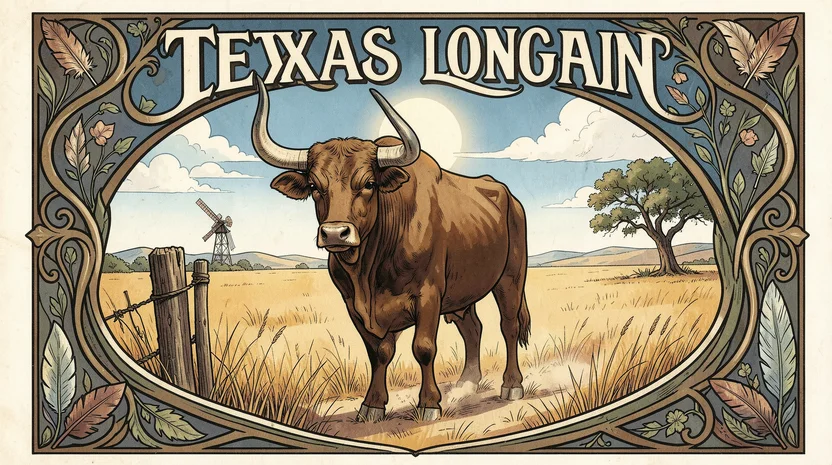
- The Iconic Horns: This is, without a doubt, the most striking feature. Texas Longhorn horns can be incredibly long, often exceeding 5 feet from tip to tip, and can grow in various shapes and configurations (e.g., lyre-shaped, upward-curving, downward-curving). The horns are made of keratin and are extensions of the frontal bone.
- Function: While appearing formidable, the horns served as a crucial defense mechanism against predators like wolves and coyotes. They also played a role in the cattle's social hierarchy.
- Body Type and Build: Texas Longhorns are typically lean and athletic, built for endurance rather than rapid weight gain.
- Muscular and Agile: They possess strong legs for long-distance travel and a deep chest for efficient breathing.
- Lean Meat: Their meat is lean and flavorful, a product of their active lifestyle and natural diet.
- Coloration and Patterns: The breed exhibits an incredible diversity in coat colors and patterns.
- Common Colors: Red, white, black, brown, yellow, and combinations thereof are prevalent.
- Unique Markings: Brindle patterns, roan, and distinctive facial markings are not uncommon.
- Hardiness and Adaptability: This is the breed's most significant trait.
- Drought and Heat Tolerance: They are remarkably resistant to drought and can thrive in hot, arid climates with minimal water.
- Disease Resistance: Their natural hardiness makes them less susceptible to common cattle diseases.
- Foraging Ability: They are excellent foragers, able to graze on tough grasses and brush where other breeds might struggle.
- Temperament: Generally docile and intelligent, though their rugged nature can sometimes lead to a more independent streak. They are known for their maternal instincts and their ability to raise calves in challenging conditions.
3. Historical Significance: The Backbone of the Cattle Empire
The Texas Longhorn played an instrumental role in shaping the American West and the nation's economy.
- The Great Cattle Drives: Following the Civil War, vast herds of wild Texas Longhorns were rounded up and driven north to railheads in Kansas and Nebraska. These epic cattle drives, often spanning hundreds of miles, were essential for supplying beef to the growing populations of the East and for establishing the foundation of the American beef industry.
- Chisholm Trail and Dodge City: Iconic routes like the Chisholm Trail and destinations like Dodge City became synonymous with the Longhorn drives.
- Challenges: These drives were fraught with peril, including stampedes, river crossings, rustlers, and harsh weather.
- Economic Powerhouse: The Longhorn boom generated immense wealth and fueled the expansion of the American West. Ranching became a dominant industry, and the image of the cowboy and the Longhorn became deeply ingrained in the American psyche.
- Foundation for Other Breeds: While the Longhorn's dominance eventually waned, its genetic contributions were significant. Breeders often crossed Longhorns with other breeds to introduce hardiness and improve meat quality.
- Decline and Near Extinction: By the late 19th and early 20th centuries, the rise of railroads, barbed wire fencing, and the introduction of more "efficient" beef breeds (like Shorthorns and Herefords) led to a dramatic decline in Longhorn populations. They were often seen as too bony and less suitable for feedlot fattening. The breed faced near extinction.
4. The Revival and Modern Legacy: A Breed Reborn
Fortunately, the story of the Texas Longhorn didn't end with its decline. A dedicated effort to preserve and promote the breed has led to its remarkable resurgence.
- The Texas Longhorn Breeders Association of America (TLBAA): Founded in 1960, the TLBAA has been instrumental in promoting the breed, establishing breed standards, and registering animals.
- Government Intervention: The U.S. government played a role in preserving Longhorns, especially on federal lands and in national parks, recognizing their historical and genetic importance.
- Modern Appeal: Today, Texas Longhorns are appreciated for a variety of reasons:
- Show Animals: Their impressive horns and diverse colors make them popular in livestock shows.
- Breeding Stock: Their genetic traits of hardiness, disease resistance, and calving ease are valuable for crossbreeding programs.
- Lean Beef Production: There's a growing market for lean, flavorful Longhorn beef, appealing to health-conscious consumers.
- Guard Animals: Their alertness and protective instincts make them effective guard animals for other livestock, particularly against predators.
- Companionship and Hobby Farming: Many individuals raise Longhorns as hobby animals, appreciating their beauty and manageable nature.
- Cultural Icon: The Texas Longhorn remains a powerful symbol of Texas heritage, resilience, and the spirit of the American West. It adorns logos, artwork, and is celebrated in rodeos and festivals across the state and beyond.
5. Studying the Texas Longhorn: Key Areas of Focus
When studying the Texas Longhorn, consider these areas:
- Genetics and Breeding: Understand the genetic lineage and the factors that contribute to horn length, color, and overall hardiness.
- History and Culture: Research the role of the Longhorn in the westward expansion, the cattle drives, and its impact on American culture.
- Anatomy and Physiology: Learn about the unique skeletal structure, particularly of the horns, and the breed's efficient metabolism.
- Behavior and Husbandry: Study their natural behaviors, social structures, and best practices for raising and managing them.
- Economic and Agricultural Impact: Analyze their contribution to the beef industry, both historically and in modern niche markets.
- Conservation Efforts: Investigate the organizations and initiatives dedicated to preserving the breed's genetic diversity and historical significance.
Conclusion: A Living Link to the Past, a Promise for the Future
The Texas Longhorn is a remarkable breed that embodies the spirit of survival and adaptation. From its humble beginnings as Spanish cattle to its starring role in the epic cattle drives and its triumphant revival, the Longhorn's journey is a compelling narrative of resilience. As we continue to appreciate its beauty, its hardiness, and its historical significance, the Texas Longhorn stands as a proud and enduring symbol of Texan identity and the wild, untamed spirit of the American West.
Further Exploration:
- Visit a Texas Longhorn ranch or attend a livestock show featuring the breed.
- Read historical accounts of the great cattle drives.
- Explore the websites of organizations like the Texas Longhorn Breeders Association of America (TLBAA).
- Watch documentaries or films that highlight the history and impact of the Texas Longhorn.