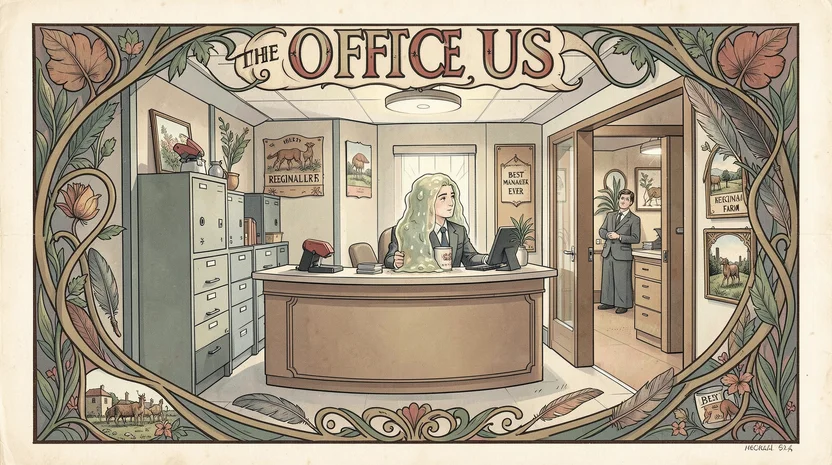
The Office Us
Similar Quizzes
About this quiz
This quiz about The Office Us features 10 questions. It was generated by one of our users August 27, 2026.
Welcome, paper-pushing aficionados and lovers of cringe-comedy! Prepare to enter the hallowed halls of Dunder Mifflin's Scranton branch, where every day is a masterclass in awkward silences, office pranks, and the enduring power of friendship (and maybe a little bit of romantic tension). For nine unforgettable seasons, "The Office" US invited us to document the mundane yet hilariously extraordinary lives of its eccentric employees. From Michael Scott's misguided management style to Jim and Pam's slow-burn romance, this mockumentary sitcom carved out a special place in our hearts, proving that even the most ordinary office setting could be a breeding ground for extraordinary laughter.
This quiz is your chance to prove your mastery of all things Dunder Mifflin. We'll test your knowledge of iconic quotes, unforgettable characters, and the legendary moments that made us laugh until we cried (and sometimes, just cry). So grab your stapler, prepare for a "that's what she said," and let's see if you're truly a superfan or just a casual observer of the greatest paper company in the world. Good luck, and remember: don't ever, for any reason, do anything to anyone for any reason ever, no matter how much that person wants it.
The Office (US) - A Comprehensive Study Guide
Welcome to your comprehensive study material for The Office (US), the beloved mockumentary sitcom that redefined workplace comedy and captured the hearts of millions. This guide aims to provide an in-depth understanding of the show's themes, characters, comedic style, and cultural impact, making it an engaging and educational resource for fans and aspiring analysts alike.
Table of Contents
Introduction: What is "The Office (US)"?
- Origins and Premise
- Mockumentary Style
- Key Themes
The Dunder Mifflin Scranton Branch: A Microcosm of Society
- The Setting and its Significance
- The "Office Family"
Character Deep Dive: The Heart and Soul of Dunder Mifflin
- Michael Scott: The Inept Leader
- Dwight Schrute: The Eccentric Enforcer
- Jim Halpert: The Everyman and Prankster
- Pam Beesly: The Artistic Observer
- The Supporting Cast: A Rich Tapestry of Personalities
The Art of the Joke: Comedic Styles and Techniques
- Observational Humor
- Cringe Comedy
- Running Gags and Callback Humor
- The Power of Silence and Glances
Narrative Arcs and Character Development
- Romance: Jim and Pam's Journey
- Career Aspirations and Disappointments
- Personal Growth and Transformation
Cultural Impact and Legacy
- Influence on Sitcoms
- Memes, Quotes, and Internet Culture
- Relatability and Enduring Popularity
Critical Analysis and Discussion Points
- The Show's Portrayal of the Modern Workplace
- The Ethics of Michael Scott's Management
- The Evolution of Humor in "The Office"
Study Questions and Activities
1. Introduction: What is "The Office (US)"?
Origins and Premise
"The Office (US)" is an American adaptation of the British sitcom of the same name, created by Ricky Gervais and Stephen Merchant. Developed by Greg Daniels, the show premiered on NBC in 2005. It follows the daily lives of the employees at the Scranton, Pennsylvania branch of the fictional Dunder Mifflin Paper Company. The series is renowned for its documentary-style filming, capturing the mundane yet often hilarious realities of office life.
Mockumentary Style
The show's defining characteristic is its mockumentary format. This means:
- Direct Address to Camera: Characters frequently break the fourth wall, looking directly into the camera to share their thoughts, reactions, and private opinions. These "talking heads" are crucial for revealing inner monologues and providing comedic commentary.
- Handheld Camera and Naturalistic Feel: The cinematography often mimics a documentary crew, with slightly shaky camera movements and a focus on capturing spontaneous moments.
- Awkward Pauses and Silences: The show embraces uncomfortable silences and awkward reactions, a hallmark of cringe comedy that amplifies the humor.
- Observational Humor: The comedy arises from observing the characters' interactions, their eccentricities, and the absurdities of everyday office situations.
Key Themes
Beyond the laughs, "The Office (US)" explores several enduring themes:
- The Mundanity and Absurdity of Work: The show highlights how even the most seemingly ordinary jobs can be filled with unexpected drama, humor, and personal meaning.
- The Importance of Human Connection: Despite the office setting, the core of the show lies in the relationships formed between colleagues, the friendships, rivalries, and romances that develop.
- The Search for Meaning and Fulfillment: Characters often grapple with job satisfaction, career ambitions, and the desire for something more in their lives.
- The Nature of Leadership (and Mismanagement): Michael Scott's tenure as regional manager provides a constant case study in what not to do, while also showcasing moments of surprising empathy and effectiveness.
- The Power of Small Moments: The show finds humor and poignancy in the seemingly insignificant details of office life, demonstrating that profound experiences can arise from the ordinary.
2. The Dunder Mifflin Scranton Branch: A Microcosm of Society
The Setting and its Significance
The Scranton branch of Dunder Mifflin isn't just a backdrop; it's a character in itself. Its drab, utilitarian design reflects the nature of the paper industry – functional, perhaps a little outdated, and often overlooked. Yet, within these walls, a vibrant and often chaotic community thrives. The office represents:
- A Second Home: For many characters, they spend more waking hours at Dunder Mifflin than anywhere else, making it a de facto family.
- A Stage for Life's Drama: The confines of the office force characters to confront their personal issues, ambitions, and relationships in close proximity.
- A Symbol of the "Gig Economy" Precursor: The show predates the widespread understanding of the "gig economy," but it captures the feeling of being a cog in a larger corporate machine, where individual worth can sometimes feel diminished.
The "Office Family"
The Scranton branch is populated by a diverse cast of characters, each with their own quirks, motivations, and contributions to the overall dynamic. They are a dysfunctional but ultimately loyal family, bound together by shared experiences, inside jokes, and the common goal of selling paper.
3. Character Deep Dive: The Heart and Soul of Dunder Mifflin
The strength of "The Office (US)" lies in its incredibly well-developed and memorable characters.
Michael Scott: The Inept Leader
- Core Motivation: To be loved and to be the "world's best boss."
- Defining Traits: Insecure, desperate for attention, often inappropriate, well-intentioned but misguided, surprisingly empathetic at times.
- Comedic Style: Cringe-inducing jokes, awkward social interactions, attempts at being "cool" that backfire spectacularly.
- Key Episodes/Moments: "Diversity Day," "Scott's Tots," "Dinner Party," his departure.
- Study Point: Michael represents the flawed but ultimately human leader. His desire for connection, though poorly executed, is relatable.
Dwight Schrute: The Eccentric Enforcer
- Core Motivation: To be the most efficient, loyal, and powerful employee at Dunder Mifflin, and to protect the office at all costs.
- Defining Traits: Intense, literal-minded, obsessed with rules and safety, a beet farmer, a volunteer sheriff's deputy, fiercely loyal to Michael.
- Comedic Style: Absurd pronouncements, bizarre facts, over-the-top reactions, his unique brand of logic.
- Key Episodes/Moments: "The Injury," "Dwight's Speech," "Stress Relief," his rise to Regional Manager.
- Study Point: Dwight is a masterclass in character commitment. His unwavering dedication to his eccentric worldview is both hilarious and, in its own way, admirable.
Jim Halpert: The Everyman and Prankster
- Core Motivation: To find happiness and fulfillment, often through playful rebellion and genuine connection.
- Defining Traits: Witty, sarcastic, observant, charming, a master prankster, relatable.
- Comedic Style: Deadpan delivery, subtle reactions to the camera, elaborate pranks on Dwight.
- Key Episodes/Moments: His pranks on Dwight, his relationship with Pam, his brief stints at other jobs.
- Study Point: Jim serves as the audience's surrogate, reacting to the absurdity with a mixture of amusement and exasperation.
Pam Beesly: The Artistic Observer
- Core Motivation: To find her voice, pursue her artistic dreams, and build a meaningful life.
- Defining Traits: Kind, artistic, initially shy and unfulfilled, grows in confidence and assertiveness.
- Comedic Style: Quietly observant, subtle reactions, witty retorts, her evolving confidence.
- Key Episodes/Moments: Her journey with Jim, her art show, her decision to go to art school.
- Study Point: Pam's arc is one of self-discovery and empowerment, making her a beloved and inspiring character.
The Supporting Cast: A Rich Tapestry of Personalities
- Andy Bernard: The a cappella-singing, anger-management-challenged salesman.
- Angela Martin: The stern, cat-loving accountant with a hidden wild side.
- Oscar Martinez: The intelligent, often exasperated accountant.
- Kevin Malone: The lovable, dim-witted accountant with a penchant for chili.
- Phyllis Lapin-Vance: The motherly, sometimes passive-aggressive saleswoman.
- Stanley Hudson: The gruff, crossword-puzzle-loving salesman who dreams of retirement.
- Ryan Howard: The ambitious, often morally ambiguous temp-turned-corporate executive.
- Kelly Kapoor: The pop-culture-obsessed, drama-loving customer service representative.
- Toby Flenderson: The mild-mannered HR representative, perpetually tormented by Michael.
Each of these characters, and many more, contribute significantly to the show's comedic fabric and emotional depth.
4. The Art of the Joke: Comedic Styles and Techniques
"The Office (US)" masterfully employs a range of comedic techniques.
Observational Humor
The show finds humor in the relatable minutiae of office life: the passive-aggressive emails, the awkward small talk, the office birthday celebrations, the passive-aggressive notes. We recognize these situations from our own lives, making the humor resonate deeply.
Cringe Comedy
This is perhaps the show's most potent weapon. Michael Scott, in particular, is a master of creating excruciatingly awkward situations that make viewers squirm with secondhand embarrassment. The humor lies in the tension of these moments and our shared discomfort.
Running Gags and Callback Humor
The show is replete with recurring jokes and themes that pay off over multiple episodes and seasons. Examples include:
- Dwight's love for beets and Schrute Farms.
- Kevin's chili incident.
- Michael's various catchphrases and misinterpretations.
- Jim's pranks on Dwight.
- Pam's artistic endeavors.
These callbacks create a sense of continuity and reward attentive viewers.
The Power of Silence and Glances
Often, the funniest moments in "The Office" are not what is said, but what is not said. A perfectly timed glance to the camera from Jim or Pam can convey a wealth of unspoken commentary. Awkward silences are used to amplify the discomfort of a situation, making it funnier.
5. Narrative Arcs and Character Development
Beyond the episodic humor, "The Office (US)" excels at crafting compelling long-term narrative arcs.
Romance: Jim and Pam's Journey
The slow-burn romance between Jim and Pam is arguably the emotional anchor of the show. Their journey from shy office crushes to married couple is filled with relatable longing, missed opportunities, and ultimately, enduring love. Their relationship is a testament to the idea that genuine connection can blossom in unexpected places.
Career Aspirations and Disappointments
Many characters struggle with their career paths. Michael longs for recognition and respect, Dwight seeks power, Pam dreams of art, and Ryan tries to climb the corporate ladder. The show realistically portrays the frustrations, setbacks, and occasional triumphs of professional life.
Personal Growth and Transformation
Over its nine seasons, characters undergo significant personal growth. Pam finds her voice and confidence, Dwight learns to embrace his softer side, and even Michael, despite his many flaws, shows moments of genuine maturity and self-awareness. This development makes the characters feel more human and their stories more impactful.
6. Cultural Impact and Legacy
"The Office (US)" has left an indelible mark on popular culture.
Influence on Sitcoms
The show's success popularized the mockumentary format in American television, paving the way for other shows like "Parks and Recreation," "Modern Family," and "Abbott Elementary." It demonstrated that a quieter, more character-driven comedy could be immensely successful.
Memes, Quotes, and Internet Culture
"The Office" is a goldmine for internet memes, GIFs, and quotable lines. Phrases like "That's what she said," "Bears. Beets. Battlestar Galactica," and countless reaction GIFs have become ingrained in online communication. The show's quotability and visual humor lend themselves perfectly to the digital age.
Relatability and Enduring Popularity
Despite being set in a paper company, the show's exploration of universal themes like friendship, love, ambition, and the search for meaning resonates with audiences of all backgrounds. Its comfort-food quality and the characters' enduring appeal have led to its continued popularity in syndication and streaming.
7. Critical Analysis and Discussion Points
"The Office (US)" offers fertile ground for deeper analysis and discussion.
The Show's Portrayal of the Modern Workplace
- How does "The Office" reflect the realities of office culture in the early 21st century?
- What does the show say about corporate hierarchy, employee morale, and the impact of technology on work?
- Is the depiction of Dunder Mifflin a realistic or exaggerated portrayal of a typical workplace?
The Ethics of Michael Scott's Management
- Is Michael Scott a good boss, a bad boss, or something in between?
- How do his management style and personal behavior impact his employees?
- Can his moments of genuine care and empathy excuse his frequent professional failings?
The Evolution of Humor in "The Office"
- How does the show's humor evolve from its early seasons to its later ones?
- Does the shift in focus from cringe comedy to more heartfelt moments detract from or enhance the show?
- How does the departure of key characters impact the comedic tone?
8. Study Questions and Activities
To further engage with this material, consider the following:
- Episode Analysis: Choose a favorite episode and analyze its comedic techniques, character development, and thematic relevance.
- Character Study: Select a character and trace their arc throughout the series. What are their defining moments? How do they change?
- Theme Exploration: Pick a key theme (e.g., friendship, ambition) and discuss how it is explored through specific characters and plotlines.
- Quote Identification: Compile a list of your favorite quotes and explain why they are memorable and effective.
- Compare and Contrast: If you've seen the British version, compare and contrast the two shows' approaches to the same premise.
- Workplace Parallels: Reflect on your own workplace experiences. What aspects of "The Office" do you find most relatable? What aspects are pure fiction?
- Fan Theory Discussion: Explore popular fan theories about the show online and discuss their validity.
This comprehensive guide provides a framework for understanding and appreciating "The Office (US)" on a deeper level. By examining its characters, comedic techniques, narrative arcs, and cultural impact, you can unlock a richer and more rewarding viewing experience. Enjoy your journey back to Dunder Mifflin!