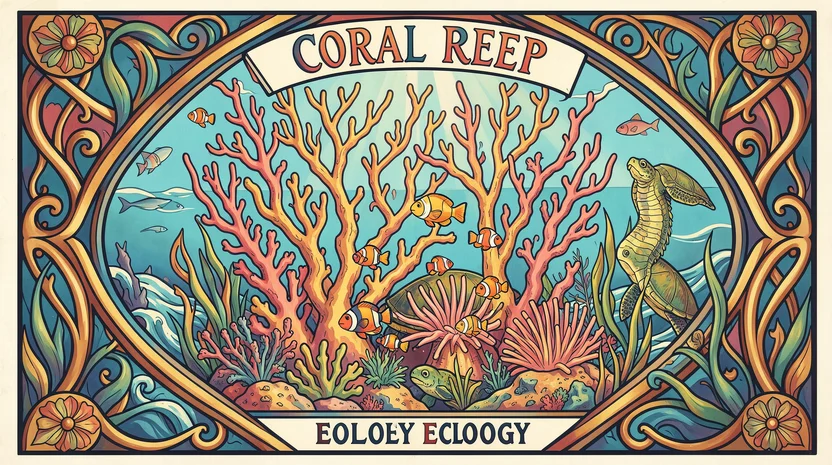
Coral Reef Ecology
Similar Quizzes
About this quiz
This quiz about Coral Reef Ecology features 10 questions. It was generated by one of our users February 13, 2026.
Coral Reef Ecology: Nature's Underwater Cities
Imagine diving into crystal-clear tropical waters and discovering a bustling metropolis teeming with life—welcome to the extraordinary world of coral reefs! Often called the "rainforests of the sea," these vibrant underwater ecosystems are among Earth's most biodiverse habitats, supporting roughly 25% of all marine species despite covering less than 1% of the ocean floor. At the heart of these living cities are tiny coral polyps, remarkable animals that have formed a fascinating partnership with microscopic algae called zooxanthellae, creating the foundation for one of nature's most spectacular collaborations.
Coral reef ecology is a intricate web of relationships where every organism plays a crucial role in maintaining the delicate balance of this underwater paradise. From the smallest cleaner fish removing parasites from larger species, to parrotfish crunching on coral and creating sandy beaches with their waste, each creature contributes to the reef's survival. However, these ancient ecosystems—some over 400 million years old—face unprecedented threats from climate change, ocean acidification, and human activities. Understanding coral reef ecology isn't just about appreciating natural beauty; it's about recognizing these ecosystems as vital sources of food, coastal protection, and economic benefits for over 500 million people worldwide. Let's dive deeper into this fascinating underwater realm and test your knowledge of how these remarkable ecosystems function!
Coral Reef Ecology: A Comprehensive Study Guide
Table of Contents
- Introduction to Coral Reefs
- Coral Biology and Structure
- Types of Coral Reefs
- Coral Reef Ecosystems
- Biodiversity and Food Webs
- Environmental Requirements
- Symbiotic Relationships
- Threats to Coral Reefs
- Conservation Strategies
- Case Studies
- Study Questions
Introduction to Coral Reefs
What are Coral Reefs?
Coral reefs are among Earth's most diverse and productive ecosystems, often called the "rainforests of the sea." These underwater structures are built by colonies of tiny marine animals called coral polyps, which secrete calcium carbonate to form hard skeletons.
Key Statistics
- Cover less than 1% of the ocean floor
- Support approximately 25% of all marine species
- Provide ecosystem services worth over $375 billion annually
- Support the livelihoods of over 500 million people worldwide
Geological Importance
- Coral reefs have existed for over 500 million years
- They are the largest living structures on Earth
- Visible from space (Great Barrier Reef)
- Act as natural breakwaters, protecting coastlines
Coral Biology and Structure
Coral Polyp Anatomy
    Tentacles with Nematocysts
           ↓
    ┌─────────────┐
    │  Mouth      │ ← Opening for feeding and waste removal
    │             │
    │  Gastrovascular │ ← Digestive cavity
    │  Cavity     │
    │             │
    │  Basal Plate│ ← Secretes calcium carbonate
    └─────────────┘
         ↑
    Calcium Carbonate Skeleton
Coral Physiology
**Hard Corals (Scleractinians)**
- Skeleton: Calcium carbonate (CaCO₃)
- Structure: Colonial organisms
- Reproduction: Sexual and asexual
- Feeding: Heterotrophic and autotrophic
**Soft Corals**
- Structure: Flexible, no hard skeleton
- Support: Calcium carbonate spicules
- Examples: Sea fans, sea whips
Coral Growth Process
- Polyp Settlement: Planula larvae settle on hard substrate
- Metamorphosis: Larvae transform into polyps
- Skeleton Formation: Secretion of calcium carbonate
- Colony Growth: Asexual reproduction through budding
- Reef Building: Accumulation over thousands of years
Types of Coral Reefs
1. Fringing Reefs
- Location: Directly adjacent to shore
- Characteristics:
- Narrow lagoon or no lagoon
- Most common type globally
- Extend directly from the coastline
- Examples: Red Sea reefs, Hawaiian reefs
2. Barrier Reefs
- Location: Separated from shore by deep lagoon
- Characteristics:
- Wide, deep lagoons (10-100+ meters)
- Can extend for hundreds of kilometers
- Complex structure with channels
- Examples: Great Barrier Reef (Australia), Belize Barrier Reef
3. Atolls
- Location: Ring-shaped reefs in open ocean
- Formation:
- Volcanic island subsidence
- Coral growth keeps pace with sinking
- Central lagoon remains
- Examples: Maldives, Marshall Islands
4. Patch Reefs
- Location: Isolated reefs within lagoons
- Characteristics:
- Small, circular or oval
- Surrounded by sand or seagrass
- Often found in groups
Coral Reef Ecosystems
Zonation of Coral Reefs
**1. Reef Flat**
- Depth: Intertidal to 2m
- Characteristics:
- High wave energy
- Temperature fluctuations
- Hardy coral species
- Dominant Species: Acropora, encrusting corals
**2. Reef Crest**
- Depth: 0-5m
- Characteristics:
- Highest wave energy
- Maximum coral growth
- High diversity
- Dominant Species: Branching and plate corals
**3. Fore Reef**
- Depth: 5-50m+
- Characteristics:
- Decreasing light levels
- Lower wave energy
- Steep slopes
- Dominant Species: Massive and plate corals
**4. Back Reef**
- Depth: 1-10m
- Characteristics:
- Protected from waves
- Sandy areas
- Seagrass beds
- Dominant Species: Soft corals, small hard corals
Microhabitats
| Habitat | Characteristics | Key Species |
|---|---|---|
| Coral Heads | Complex 3D structure | Damselfish, wrasses |
| Rubble Zones | Broken coral pieces | Gobies, blennies |
| Sand Channels | Soft substrate | Rays, flatfish |
| Caves/Overhangs | Low light, shelter | Sweepers, cardinalfish |
| Lagoons | Calm water, mixed substrate | Parrotfish, surgeonfish |
Biodiversity and Food Webs
Species Richness
Coral reefs host an extraordinary diversity of life:
- Fish: 4,000+ species
- Mollusks: 5,000+ species
- Crustaceans: 1,700+ species
- Echinoderms: 800+ species
- Sponges: 600+ species
- Algae: 1,500+ species
Trophic Levels
**Primary Producers**
- Zooxanthellae (symbiotic algae)
- Macroalgae (seaweeds)
- Turf algae (filamentous algae)
- Phytoplankton
- Cyanobacteria
**Primary Consumers**
- Herbivorous Fish: Parrotfish, surgeonfish, rabbitfish
- Invertebrates: Sea urchins, gastropods, crustaceans
- Zooplankton: Copepods, larvaceans
**Secondary Consumers**
- Planktivorous Fish: Anthias, chromis, fusiliers
- Omnivorous Fish: Angelfish, butterflyfish
- Small Predators: Wrasses, small groupers
**Tertiary Consumers**
- Large Predatory Fish: Sharks, barracuda, large groupers
- Moray Eels
- Octopuses
**Apex Predators**
- Reef Sharks: Grey reef, blacktip, whitetip
- Giant Moray Eels
- Large Groupers: Goliath grouper, Napoleon wrasse
Food Web Complexity
graph TD
    A[Sunlight] --> B[Zooxanthellae]
    A --> C[Macroalgae]
    B --> D[Coral Polyps]
    C --> E[Herbivorous Fish]
    D --> F[Coral Predators]
    E --> G[Secondary Consumers]
    F --> G
    G --> H[Apex Predators]
    I[Plankton] --> J[Planktivores]
    J --> G
Environmental Requirements
Physical Factors
**Temperature**
- Optimal Range: 25-29°C (77-84°F)
- Critical Limits:
- Lower limit: ~20°C
- Upper limit: ~32°C
- Thermal Stress: Causes coral bleaching
**Light**
- Requirement: High light intensity for photosynthesis
- Depth Limit: Generally <50m in clear water
- Quality: Blue light penetrates deepest
**Water Clarity**
- Turbidity: Low suspended particles
- Visibility: Often >30 meters
- Sedimentation: Major threat to coral health
**Salinity**
- Optimal Range: 34-37 ppt
- Sensitivity: Corals are stenohaline
- Freshwater Impact: River discharge can be harmful
Chemical Factors
**pH and Ocean Acidification**
- Current pH: ~8.1 (seawater)
- Historical pH: ~8.2 (pre-industrial)
- Impact: Reduced calcification rates
- Future Concern: Continued acidification
**Dissolved Oxygen**
- Requirement: High oxygen levels
- Sources: Photosynthesis, wave action
- Threats: Eutrophication, pollution
**Nutrients**
- Preference: Low-nutrient (oligotrophic) waters
- Nitrogen: <1.0 μM
- Phosphorus: <0.1 μM
- Eutrophication: Promotes algal growth
Hydrodynamic Factors
**Wave Action**
- Benefits:
- Nutrient transport
- Waste removal
- Oxygenation
- Limits: Excessive energy can damage corals
**Currents**
- Importance:
- Larval transport
- Food delivery
- Temperature regulation
Symbiotic Relationships
Coral-Zooxanthellae Symbiosis
This relationship is the foundation of coral reef ecosystems:
**The Partners**
- Host: Coral polyp
- Symbiont: Symbiodinium spp. (dinoflagellate algae)
**Benefits to Coral**
- Nutrition: Up to 90% of energy needs
- Oxygen: Photosynthetic oxygen production
- Calcification: Enhanced skeleton formation
- Waste Removal: Nitrogen and phosphorus uptake
**Benefits to Zooxanthellae**
- Protection: Safe environment in coral tissues
- Nutrients: Nitrogen, phosphorus, CO₂
- Stable Habitat: Optimal light exposure
**Mechanism**
Zooxanthellae: CO₂ + H₂O + Light → Glucose + O₂
                                    ↓
Coral Polyp: ←── Glucose, Amino Acids, Oxygen
             ↓
Coral Polyp: CO₂, NH₄⁺, PO₄³⁻ ──→ Zooxanthellae
Other Symbiotic Relationships
**Cleaner Fish Stations**
- Cleaners: Cleaner wrasses, gobies
- Clients: Large fish, rays, sharks
- Service: Parasite and dead tissue removal
**Anemone-Clownfish**
- Protection: Anemone provides shelter
- Service: Clownfish defends anemone, provides nutrients
**Coral-Crab Partnerships**
- Examples: Trapezia crabs with Acropora corals
- Service: Crabs defend against crown-of-thorns starfish
Threats to Coral Reefs
Climate Change Impacts
**1. Ocean Warming**
- Mechanism: Thermal stress disrupts coral-algae symbiosis
- Result: Coral bleaching events
- Timeline:
- 1°C above average: Stress begins
- 2°C above average: Severe bleaching