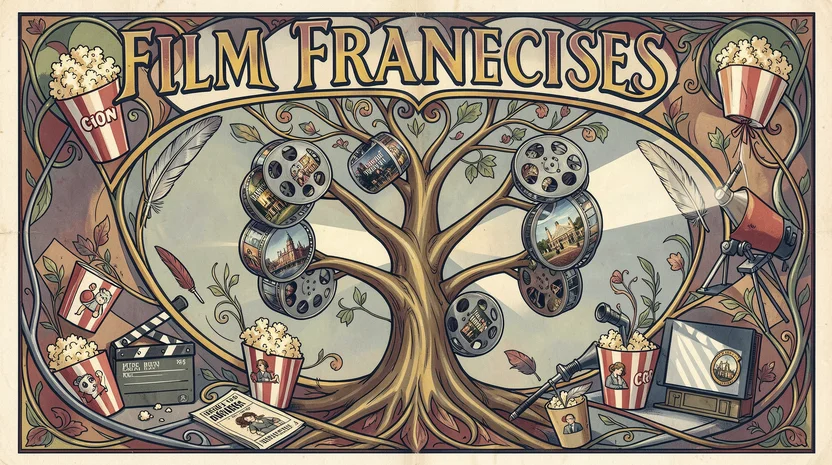
Film Franchises
Similar Quizzes
About this quiz
This quiz about Film Franchises features 10 questions. It was generated by one of our users February 21, 2026.
Get ready to test your cinematic knowledge! This quiz dives deep into the world of film franchises – those beloved series of interconnected movies that have captured our imaginations and dominated the box office for decades. From epic space sagas to magical wizarding schools and gritty superhero universes, franchises are the lifeblood of modern Hollywood, offering fans a consistent stream of stories and characters to fall in love with. Think you know your Star Wars from your Marvel, or your Harry Potter from your Fast & Furious? Prepare to revisit iconic moments, recall crucial plot points, and perhaps even learn a thing or two about the creative forces behind these cinematic giants.
These sprawling narratives aren't just about sequels; they're about building worlds, developing complex characters over time, and creating lasting cultural touchstones. Franchises allow filmmakers to explore intricate lore, introduce new heroes and villains, and ultimately, create a shared universe that fans can invest in for years, even generations. So, whether you're a casual moviegoer or a die-hard cinephile, this quiz is designed to challenge your memory and celebrate the enduring power of the film franchise. Let's see if you have what it takes to conquer this cinematic gauntlet!
Film Franchises: The Power of Shared Universes and Enduring Stories
Film franchises are a cornerstone of the modern movie industry, transforming individual films into sprawling, interconnected universes that capture the imaginations of audiences worldwide. This study material will delve into the fascinating world of film franchises, exploring their origins, evolution, defining characteristics, and the strategies behind their immense success.
Table of Contents
- What is a Film Franchise?
- Definition and Core Concepts
- Distinguishing Franchises from Series and Sequels
- The Genesis and Evolution of Film Franchises
- Early Examples and Precursors
- The Rise of the Blockbuster and Franchise Dominance
- Technological Advancements and their Impact
- Key Characteristics of Successful Film Franchises
- Compelling Characters and Relatable Themes
- World-Building and Immersive Universes
- Narrative Arcs and Long-Term Storytelling
- Merchandising and Ancillary Revenue Streams
- Adaptability and Evolution
- Types of Film Franchises
- Sequel-Driven Franchises
- Shared Universe Franchises (The Marvel Model)
- Adaptation Franchises (Books, Comics, Games)
- Reboot and Revival Franchises
- The Business of Franchises: Strategies for Success
- Identifying and Cultivating Intellectual Property (IP)
- Audience Engagement and Community Building
- Marketing and Promotion: The Power of Hype
- Diversification: Spin-offs, Prequels, and Beyond
- Risk Management and Investment
- Case Studies: Iconic Film Franchises
- The Star Wars Saga
- The Marvel Cinematic Universe (MCU)
- The Harry Potter Universe
- James Bond: The Enduring Spy
- The Fast & Furious Franchise: From Street Racing to Global Domination
- The Impact and Criticisms of Film Franchises
- Economic Impact and Industry Trends
- Cultural Impact and Global Reach
- Creative Concerns: Stagnation and Formulaic Storytelling
- Audience Fatigue and the "Franchise Fatigue" Phenomenon
- The Future of Film Franchises
- Emerging Trends and Technologies
- The Role of Streaming Services
- The Evolving Nature of Storytelling
- Conclusion: The Enduring Appeal of the Cinematic Universe
1. What is a Film Franchise?
Definition and Core Concepts
A film franchise is a collection of related films, often produced by the same studio, that share a common narrative universe, characters, or thematic elements. The core idea is to leverage the success of an initial film to create a series of subsequent installments, building a dedicated audience and maximizing profitability.
Key concepts include:
- Intellectual Property (IP): The underlying characters, story, and world that form the basis of the franchise.
- Brand Recognition: The established name and imagery associated with the franchise, which acts as a powerful marketing tool.
- Audience Loyalty: The dedicated fan base that eagerly anticipates new installments.
- Interconnectedness: The degree to which films within the franchise relate to each other, either directly through plot or indirectly through shared lore.
Distinguishing Franchises from Series and Sequels
While often used interchangeably, there are nuances:
- Sequel: A single film that directly continues the story of a previous film. Example: The Godfather Part II.
- Series: A collection of films that may or may not share a continuous narrative or universe, but often feature recurring characters or themes. Example: The Pink Panther films, while featuring Inspector Clouseau, have less narrative continuity than a true franchise.
- Franchise: The most encompassing term, implying a deliberate, often multi-film strategy to build a sustained cinematic universe or brand. Franchises are characterized by their potential for expansion beyond the initial film series.
2. The Genesis and Evolution of Film Franchises
Early Examples and Precursors
The concept of recurring characters and stories isn't new. Early cinema saw:
- Serial Films: Short, episodic films released weekly, often featuring cliffhangers. Examples include The Perils of Pauline (1914) and Flash Gordon (1936). These laid the groundwork for serialized storytelling.
- Recurring Characters: Films featuring popular characters like Sherlock Holmes or Tarzan, often in independent adventures but building a recognizable brand.
The Rise of the Blockbuster and Franchise Dominance
The modern era of film franchising truly took off with the advent of the blockbuster.
- Jaws (1975): Often cited as the first modern blockbuster, its massive success demonstrated the potential for a single film to generate enormous revenue and cultural impact.
- Star Wars (1977): This was a watershed moment. Star Wars wasn't just a film; it was a phenomenon. Its groundbreaking special effects, expansive mythology, and aggressive merchandising strategy established the blueprint for what a film franchise could be.
- Indiana Jones (1981): Another successful adventure franchise that proved the appetite for recurring heroes and globe-trotting quests.
Technological Advancements and their Impact
- Special Effects: Advances in CGI and visual effects have allowed for the creation of increasingly fantastical worlds and creatures, making ambitious franchise concepts viable.
- Digital Filmmaking: Lower production costs and easier distribution have opened doors for more independent franchise attempts and the expansion of existing ones.
- Internet and Social Media: These platforms have revolutionized audience engagement, allowing studios to gauge interest, build hype, and foster fan communities on a global scale.
3. Key Characteristics of Successful Film Franchises
Compelling Characters and Relatable Themes
At the heart of every great franchise are characters that audiences connect with and themes that resonate.
- Archetypes and Relatability: Whether it's a heroic journey, a quest for justice, or a tale of found family, franchises often tap into universal human experiences.
- Character Development: Over multiple films, characters can grow, evolve, and face new challenges, keeping audiences invested.
- Strong Antagonists: Memorable villains often drive the conflict and provide compelling foils for the heroes.
World-Building and Immersive Universes
Franchises excel at creating rich, detailed worlds that feel lived-in and invite exploration.
- Lore and Mythology: Established backstories, rules, and histories create a sense of depth and complexity.
- Visual Design: Distinctive aesthetics, costumes, and environments contribute to the unique identity of a franchise.
- Consistency: Maintaining a cohesive vision across multiple films is crucial for immersion.
Narrative Arcs and Long-Term Storytelling
Franchises allow for ambitious, multi-film narratives that can span years or even decades.
- Epic Scope: The ability to tell grand, overarching stories that unfold gradually.
- Interconnectedness: Plot threads and character arcs can weave through multiple films, rewarding attentive viewers.
- Sense of Progression: Audiences experience the journey alongside the characters.
Merchandising and Ancillary Revenue Streams
The financial engine of a franchise often extends far beyond box office receipts.
- Toys and Action Figures: A classic revenue stream for action-oriented franchises.
- Video Games: Interactive experiences that allow fans to engage with the universe.
- Books and Comics: Expanding the lore and providing new stories.
- Theme Park Attractions: Immersive experiences that bring the franchise to life.
- Clothing and Apparel: Everyday ways for fans to express their fandom.
Adaptability and Evolution
Successful franchises can adapt to changing times and audience tastes.
- Reinvention: Reboots, re-imaginings, and new directions can revitalize a franchise.
- Genre Blending: Incorporating new elements or subgenres can keep things fresh.
- Addressing Social Commentary: Franchises can sometimes reflect or comment on contemporary issues.
4. Types of Film Franchises
Sequel-Driven Franchises
The most straightforward type, where each film directly continues the story of the previous one.
- Examples: The Godfather trilogy, Back to the Future trilogy, Toy Story series.
- Key: A clear narrative progression and character development across installments.
Shared Universe Franchises (The Marvel Model)
This is perhaps the most dominant and complex form of franchising today. Multiple films and often TV shows are interconnected, sharing characters, plot points, and a common overarching narrative.
- Examples: Marvel Cinematic Universe (MCU), Star Wars (with its expanded universe), DC Extended Universe (DCEU).
- Key: Careful planning, intricate plot weaving, and a focus on building a cohesive, expansive world.
Adaptation Franchises (Books, Comics, Games)
These franchises originate from other media and are translated to the big screen.
- Examples: Harry Potter (books), Lord of the Rings (books), Spider-Man (comics), The Witcher (games/books).
- Key: Leveraging existing fan bases and translating beloved source material faithfully (or with successful adaptations).
Reboot and Revival Franchises
These aim to restart a franchise, often with a new cast and creative team, or to bring back a dormant franchise to a new generation.
- Examples: Batman Begins (reboot of Batman), The Force Awakens (revival of Star Wars), Ghostbusters: Afterlife (revival).
- Key: Balancing nostalgia with fresh storytelling and appealing to both existing fans and newcomers.
5. The Business of Franchises: Strategies for Success
Identifying and Cultivating Intellectual Property (IP)
The foundation of any franchise is strong, recognizable IP.
- Original Concepts: Creating entirely new worlds and characters with franchise potential.
- Acquiring Rights: Purchasing the rights to successful books, comics, or games.
- Nurturing the Brand: Consistently delivering quality content that reinforces the IP's value.
Audience Engagement and Community Building
Franchises thrive on dedicated fan bases.
- Fan Conventions and Events: Creating spaces for fans to connect with each other and the creators.
- Social Media Interaction: Engaging with fans online, sharing behind-the-scenes content, and responding to feedback.
- Exclusive Content: Offering special features, deleted scenes, and interviews to reward loyal fans.
Marketing and Promotion: The Power of Hype
Building anticipation is crucial.
- Teaser Trailers and First Looks: Generating initial buzz.
- Full Trailers and TV Spots: Revealing more of the story and action.
- Cross-Promotional Campaigns: Partnering with other brands and media.
- Targeted Advertising: Reaching specific demographics and fan groups.
Diversification: Spin-offs, Prequels, and Beyond
Expanding the franchise beyond the core narrative.
- Spin-offs: Films or series focusing on secondary characters or different aspects of the universe.
- Prequels: Stories set before the original films, exploring origins and backstory.
- Anthology Films: Standalone stories within the same universe.
Risk Management and Investment
Franchises are massive investments, requiring careful financial planning.
- Budgeting: Allocating significant resources for production, marketing, and distribution.
- Talent Acquisition: Securing popular actors, directors, and writers.
- Global Distribution: Ensuring the film reaches audiences worldwide.
- Contingency Planning: Preparing for potential production delays or unexpected challenges.
6. Case Studies: Iconic Film Franchises
The **Star Wars** Saga
- Origin: George Lucas's epic space opera, beginning with A New Hope (1977).
- Key Elements: Mythological storytelling, groundbreaking special effects, iconic characters (Luke Skywalker, Darth Vader, Han Solo), extensive merchandising, a sprawling universe.
- Evolution: Original trilogy, prequel trilogy, sequel trilogy, spin-off films (Rogue One, Solo), animated and live-action TV series.
The **Marvel Cinematic Universe (MCU)**
- Origin: A meticulously planned shared universe of interconnected films and TV shows, beginning with Iron Man (2008).
- Key Elements: Interlocking storylines, recurring characters, multiple phases of storytelling, diverse genres within a superhero framework, massive crossover events.
- Impact: Redefined the shared universe model and became a dominant force in global cinema.
The **Harry Potter** Universe
- Origin: J.K. Rowling's best-selling book series about a young wizard.
- Key Elements: Rich magical world, coming-of-age story, themes of friendship and courage, beloved characters, successful book-to-film adaptations.
- Expansion: Fantastic Beasts prequel series, theme park attractions, merchandise.
**James Bond**: The Enduring Spy
- Origin: Ian Fleming's novels, with the first film Dr. No released in 1962.
- Key Elements: Iconic protagonist, formulaic but effective narrative structure (gadgets, villains, exotic locations), evolving portrayal of Bond, longevity.
- Success: Adaptability to different eras and actors, consistent delivery of action and espionage thrills.
The **Fast & Furious** Franchise: From Street Racing to Global Domination
- Origin: The Fast and the Furious (2001), focusing on street racing culture.
- Key Elements: Evolving from street racing to global espionage, emphasis on found family, increasingly elaborate action sequences, diverse cast.
- Transformation: A remarkable example of a franchise that reinvented itself to achieve massive global success.
7. The Impact and Criticisms of Film Franchises
Economic Impact and Industry Trends
- Dominance of Blockbusters: Franchises are often the biggest financial drivers of the film industry, influencing studio investment decisions.
- Reduced Risk: Studios often favor investing in established IP with a proven audience over original, riskier projects.
- Globalization of Cinema: Franchises have a massive global appeal, driving international box office revenue.
Cultural Impact and Global Reach
- Shared Cultural Touchstones: Franchises create common reference points and discussion topics for people worldwide.
- Influence on Pop Culture: Characters, themes, and imagery become ingrained in popular culture.
- Fandom and Community: Fostering passionate fan communities that extend beyond the films themselves.
Creative Concerns: Stagnation and Formulaic Storytelling
- "Sequelitis": A perceived tendency for franchises to become repetitive and predictable.
- Emphasis on Spectacle over Substance: Concerns that visual effects and action overshadow character development and meaningful narratives.
- Creative Compromise: Directors and writers may face pressure to conform to established franchise formulas.
Audience Fatigue and the "Franchise Fatigue" Phenomenon
- Oversaturation: The sheer volume of franchise content can lead to audience burnout.
- Diminishing Returns: Audiences may become less enthusiastic about new installments if they feel they've seen it all before.
- Desire for Originality: A growing demand for fresh, innovative storytelling outside of established brands.
8. The Future of Film Franchises
Emerging Trends and Technologies
- Immersive Storytelling: VR and AR technologies could offer new ways to experience franchise worlds.
- Interactive Content: Blurring the lines between film, gaming, and serialized storytelling.
- AI-Assisted Content Creation: Potential for AI to aid in scriptwriting, character design, and even animation.
The Role of Streaming Services
- Expanded Universe Development: Streaming platforms offer a more flexible space for developing TV series spin-offs and exploring niche aspects of a franchise.
- Direct-to-Consumer Models: Studios can bypass traditional distribution to reach audiences directly.
- Data-Driven Decisions: Streaming services' vast user data can inform franchise development and content creation.
The Evolving Nature of Storytelling
- Fragmented Audiences: Catering to diverse tastes and niche interests.
- Global Collaboration: Increased international co-productions and diverse creative voices.
- Focus on Authenticity: A potential push towards more grounded and character-driven narratives, even within large-scale universes.
9. Conclusion: The Enduring Appeal of the Cinematic Universe
Film franchises are more than just a business model; they are a powerful form of modern mythology. They offer audiences escape, connection, and the joy of revisiting beloved characters and worlds. While criticisms of formulaic storytelling and potential audience fatigue are valid, the inherent appeal of expansive narratives, relatable heroes, and immersive universes ensures that film franchises will continue to be a dominant force in entertainment for the foreseeable future. The challenge for creators will be to innovate, to surprise, and to tell stories that resonate deeply, ensuring that these cinematic empires continue to capture our imaginations.