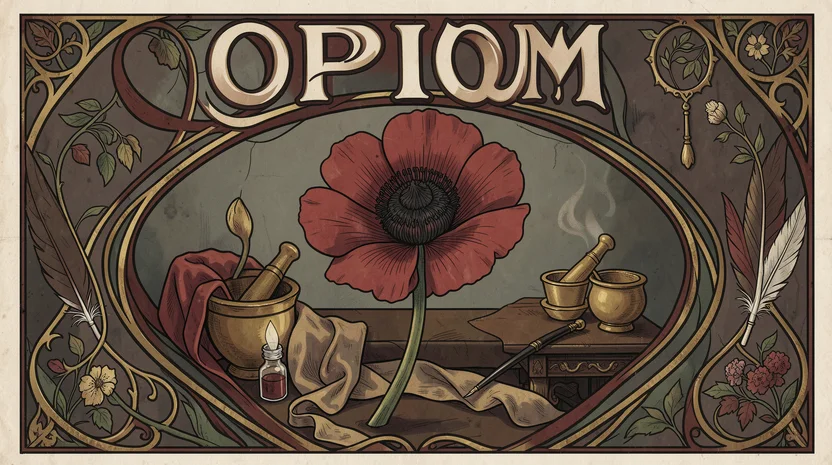
Opium
Similar Quizzes
About this quiz
This quiz about Opium features 10 questions. It was generated by one of our users April 8, 2026.
Prepare to delve into a substance shrouded in both ancient mystique and modern controversy. For millennia, "opium" has been a source of remarkable pain relief and profound altered states, its milky sap harvested from the poppy flower playing a pivotal role in medicinal advancements and cultural traditions across the globe. From its early use in Sumerian civilizations to its integral part in the development of powerful analgesics, the story of opium is a complex tapestry woven with threads of healing, dependence, and historical upheaval.
This quiz will explore the fascinating journey of opium, from its botanical origins and chemical compounds to its multifaceted impact on human history and society. We'll uncover its medicinal properties, the evolution of its use, and the profound challenges it has presented. Sharpen your knowledge, for the world of opium is as potent and captivating as the substance itself.
Opium: A Comprehensive Study
Opium, derived from the opium poppy (Papaver somniferum), has a long and complex history intertwined with medicine, culture, and conflict. This study material aims to provide a comprehensive and educational overview of opium, covering its origins, composition, effects, medicinal uses, and the societal implications of its use and abuse.
1. Introduction to the Opium Poppy
The opium poppy (Papaver somniferum) is an annual herbaceous flowering plant belonging to the family Papaveraceae. It is native to the Mediterranean region and Western Asia but is now cultivated in many parts of the world.
Botanical Characteristics:
- Flowers: Typically large, showy, and come in various colors, including white, pink, red, and purple.
- Seed Pods (Capsules): The most important part for opium production. These are smooth, globe-shaped, and hollow once the seeds mature.
- Seeds: Small, kidney-shaped, and are used in culinary applications (e.g., poppy seed bagels, cakes). They do not contain significant amounts of opium alkaloids.
Cultivation:
- Opium poppies are cultivated in a variety of climates, requiring well-drained soil and adequate sunlight.
- Legal Cultivation: In many countries, cultivation is strictly controlled and licensed for medicinal purposes (e.g., Australia, Turkey, India).
- Illicit Cultivation: Significant amounts are grown illegally, particularly in regions like Afghanistan, Myanmar, and Laos, often for the production of heroin.
2. Opium: The Substance
Opium itself is the dried latex obtained from the unripe seed pods of the opium poppy.
Harvesting:
- The process involves making shallow incisions in the surface of the immature seed pods.
- The milky white latex that oozes out is allowed to dry and harden, turning a reddish-brown color.
- This dried latex is then scraped off the pods and collected.
Appearance and Aroma:
- Raw opium typically appears as a dark brown or black, sticky mass.
- It has a characteristic, often pungent, aroma.
Composition:
- Opium is a complex mixture of alkaloids, with morphine being the most abundant and pharmacologically significant.
- Other important alkaloids include:
- Codeine: A weaker analgesic and cough suppressant.
- Thebaine: A precursor for the synthesis of semi-synthetic opioids like oxycodone and hydrocodone.
- Noscapine (Narcotine): Has antitussive (cough-suppressing) properties and some potential for other medicinal uses.
- Papaverine: A smooth muscle relaxant.
- Opium also contains other compounds like sugars, resins, and proteins.
3. Pharmacological Effects of Opium
The effects of opium are primarily due to its opioid alkaloids, acting on the central nervous system and other parts of the body.
Mechanism of Action:
- Opioid alkaloids bind to opioid receptors (mu, kappa, delta) in the brain, spinal cord, and gut.
- These receptors are part of the body's natural pain-relief system, which uses endogenous opioids (endorphins).
- When exogenous opioids (from opium) bind to these receptors, they mimic and amplify the body's natural pain-signaling pathways.
Key Effects:
- Analgesia (Pain Relief): This is the most significant therapeutic effect. Opioids effectively reduce the perception of pain.
- Euphoria: A feeling of intense pleasure and well-being, which contributes to the addictive potential of opium.
- Sedation/Drowsiness: Opioids can induce a state of calm and sleepiness.
- Respiratory Depression: This is the most dangerous acute side effect. Opioids slow down and can eventually stop breathing, leading to overdose.
- Miosis (Pupil Constriction): "Pinpoint pupils" are a classic sign of opioid intoxication.
- Nausea and Vomiting: Common side effects, especially when first using opioids.
- Constipation: Opioids slow down the movement of the intestines, leading to severe constipation.
- Cough Suppression: Codeine and noscapine are particularly effective at reducing the urge to cough.
- Euphoric Recall: The pleasurable sensations can lead to compulsive use.
4. Medicinal Uses of Opium and its Derivatives
Historically, opium was a primary medicinal substance. Today, its derivatives are crucial in modern medicine.
Historical Uses:
- Ancient Civilizations: Used by Sumerians, Egyptians, Greeks, and Romans for pain relief, sleep, and to treat various ailments.
- Laudanum: A tincture of opium in alcohol, widely used as a painkiller and sedative from the 16th to the 20th centuries.
Modern Pharmaceutical Applications:
- Morphine: Still a cornerstone of pain management, especially for severe acute pain (e.g., post-surgery, trauma) and chronic cancer pain.
- Codeine: Used for moderate pain and as an antitussive (cough suppressant). Often found in combination with other pain relievers like acetaminophen or ibuprofen.
- Thebaine-derived Opioids:
- Oxycodone: A potent painkiller used for moderate to severe pain.
- Hydrocodone: Similar to oxycodone, used for moderate to severe pain.
- Hydromorphone: A potent opioid analgesic.
- Oxymorphone: Another potent opioid analgesic.
- Semi-synthetic Opioids (Heroin Analogs):
- Fentanyl: Extremely potent synthetic opioid, used for severe pain and as an anesthetic. Its potency makes it particularly dangerous in illicit use.
- Sufentanil, Alfentanil, Remifentanil: Used in anesthesia.
- Opium Alkaloids for Specific Conditions:
- Papaverine: Used as a smooth muscle relaxant, particularly for spasms of the gastrointestinal tract and blood vessels.
- Noscapine: Used as an antitussive.
5. The Dark Side: Opium Addiction and Abuse
The euphoric and pain-relieving properties of opium and its derivatives make them highly susceptible to abuse and addiction.
Tolerance: With repeated use, the body requires higher doses to achieve the same effect.
Dependence: The body adapts to the presence of the drug, leading to withdrawal symptoms when use is stopped or reduced.
Withdrawal Symptoms: Can include anxiety, insomnia, muscle aches, nausea, vomiting, diarrhea, sweating, and intense cravings.
Addiction (Opioid Use Disorder): A chronic, relapsing brain disease characterized by compulsive drug seeking and use, despite harmful consequences.
Illicit Opium Derivatives:
- Heroin: A semi-synthetic opioid derived from morphine. It is highly addictive and often injected, leading to serious health risks.
- Opioid Overdose: A life-threatening condition caused by excessive opioid intake, leading to severe respiratory depression. Naloxone (Narcan) is an opioid antagonist that can rapidly reverse an overdose.
Societal Impact:
- Public Health Crisis: The opioid epidemic has devastating consequences, including increased overdose deaths, strain on healthcare systems, and social disruption.
- Crime and Violence: Illicit drug trade associated with opium cultivation and trafficking can fuel crime and conflict.
- Economic Costs: Significant costs associated with healthcare, addiction treatment, law enforcement, and lost productivity.
6. Historical and Cultural Significance
Opium has played a significant role throughout human history and across various cultures.
- Ancient Use: Evidence of opium use dates back thousands of years in Mesopotamia, Egypt, and Greece, often associated with religious rituals and medicinal practices.
- The Silk Road: Opium trade was an integral part of the Silk Road, facilitating its spread across Asia.
- Colonialism and Opium Wars:
- The British East India Company's lucrative opium trade with China led to the Opium Wars in the mid-19th century.
- These wars had profound geopolitical consequences, weakening China and establishing spheres of influence.
- Literature and Art: Opium has been a recurring theme in literature and art, often depicted as a source of inspiration, escape, or decadence.
- Cultural Practices: In some cultures, controlled use of opium has been integrated into social or spiritual practices, though this is increasingly rare and often illegal.
7. Legal Status and Regulation
Due to its addictive potential and the dangers of abuse, opium and its derivatives are strictly regulated worldwide.
- International Conventions: The Single Convention on Narcotic Drugs (1961) and subsequent protocols aim to control the production, distribution, and use of narcotic drugs, including opium and its derivatives.
- National Laws: Each country has its own laws governing the cultivation, import, export, prescription, and possession of opium-related substances.
- Classification: Opioids are typically classified under controlled substance schedules based on their medical use and potential for abuse (e.g., Schedule II in the US for many medical opioids).
- Strict Prescription Requirements: Opioid medications for pain management require a doctor's prescription and are dispensed with strict oversight.
8. Conclusion
Opium, a substance with a rich and tumultuous history, continues to present a dual-edged sword. On one hand, its potent alkaloids are indispensable tools in modern medicine for alleviating suffering. On the other hand, their powerful psychoactive effects have fueled addiction and devastating public health crises. Understanding the complex nature of opium—from its botanical origins to its pharmacological effects and societal implications—is crucial for informed discussion, effective policy-making, and responsible medical practice.
This study material provides a foundational understanding of opium. For deeper knowledge, further research into specific alkaloids, the neurobiology of addiction, and global drug policies is recommended.