Sitka Spruce
Similar Quizzes
About this quiz
This quiz about Sitka Spruce features 10 questions. It was generated by one of our users February 21, 2026.
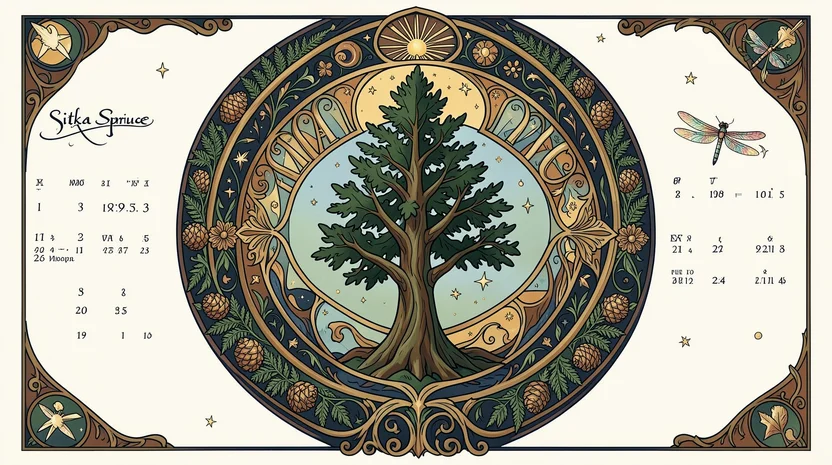
Prepare to test your knowledge on one of the Pacific Northwest's most iconic and colossal conifers: the Sitka spruce. Imagine a tree so immense it can pierce the clouds, its bark a rough, reddish-brown tapestry, and its needles sharp and pointed, a clear signal to keep your distance. This majestic giant, scientifically known as *Picea sitchensis*, is not just a beautiful sight; it's a vital part of its ecosystem, providing shelter and sustenance for countless creatures and playing a crucial role in the region's verdant landscapes.
From its coastal stronghold stretching from Alaska down to Northern California, the Sitka spruce thrives in the misty, moist air, often dominating the temperate rainforests it calls home. Its impressive size and strength have also made it historically significant, valued for its lightweight yet durable wood, which has been used in everything from aircraft construction to musical instruments. So, how much do you really know about this magnificent tree? Let's dive in and see if you can rise to the challenge!
Sitka Spruce: The Majestic Giant of the Pacific Northwest
The Sitka spruce (Picea sitchensis) is a true icon of the Pacific Northwest, a majestic conifer that dominates vast swathes of its native range. From its towering stature to its vital ecological roles and historical significance, this tree captivates with its resilience and grandeur. This study material will delve deep into the world of the Sitka spruce, providing a comprehensive and engaging exploration for students and enthusiasts alike.
1. Taxonomy and Identification
Let's start by understanding where the Sitka spruce fits in the botanical world and how to identify it.
1.1. Scientific Classification
- Kingdom: Plantae
- Division: Pinophyta
- Class: Pinopsida
- Order: Pinales
- Family: Pinaceae (Pine Family)
- Genus: Picea (Spruce)
- Species: Picea sitchensis
1.2. Etymology
- Genus Picea: Derived from the Latin word "pix," meaning "pitch" or "resin," referring to the sticky sap of spruce trees.
- Species sitchensis: Named after the Sitka Island (now officially Baranof Island) in Alaska, where the first specimens were collected by botanist Archibald Menzies in 1792.
1.3. Distinguishing Features
Sitka spruce is a distinctive conifer, and recognizing its key characteristics will help you identify it in the wild.
Size and Shape:
- Height: The largest spruce species in the world, capable of reaching immense heights of over 300 feet (90 meters). Mature trees are typically 100-150 feet (30-45 meters) tall.
- Trunk: Straight, massive, and often buttressed at the base.
- Crown: Broad and irregular in old-growth trees, becoming more conical in younger specimens.
- Age: Can live for hundreds of years, with some individuals estimated to be over 1,000 years old.
Needles:
- Shape: Sharp, stiff, and pointed (hence the common name "spruce").
- Length: 0.5 to 0.75 inches (1.3 to 1.9 cm) long.
- Color: Dark green to bluish-green on the upper surface, with two distinct white bands of stomata on the underside, giving them a silvery appearance.
- Arrangement: Spirally arranged around the twig, but often appear flattened due to being spread out.
- Feel: Rigid and prickly, unlike the softer needles of firs.
Cones:
- Shape: Cylindrical and pendulous (hanging downwards).
- Length: 2 to 4 inches (5 to 10 cm) long.
- Color: Light brown to reddish-brown when mature.
- Scales: Thin, papery, and flexible, with wavy or toothed edges. This is a key differentiator from fir cones, which are rigid and stand upright.
- Maturity: Typically mature in a single season, releasing seeds in the fall.
Bark:
- Young Trees: Smooth and grayish.
- Mature Trees: Thick, reddish-brown to gray-brown, and deeply furrowed into scaly plates.
Twigs:
- Appearance: Orange-brown to grayish-brown, often rough due to the persistent leaf bases.
- Buds: Reddish-brown, conical, and resinous.
2. Distribution and Habitat
The Sitka spruce has a specific and remarkable geographical range, deeply tied to the coastal environment.
2.1. Native Range
- Geographic Location: Primarily found along the Pacific coast of North America.
- Latitudinal Extent: Extends from south-central Alaska, through British Columbia and Washington, down to northern California.
- Coastal Influence: Its distribution is strongly influenced by the oceanic climate, rarely venturing more than a few miles inland.
2.2. Habitat Preferences
- Climate: Thrives in areas with cool, wet climates characterized by high rainfall and frequent fog.
- Soil: Tolerant of a wide range of soils but prefers moist, well-drained, acidic soils, often found in alluvial flats, coastal plains, and lower mountain slopes. It can also grow on rocky outcrops and even in saline environments.
- Elevation: Typically grows from sea level up to about 2,600 feet (800 meters), but can be found at higher elevations in more southerly parts of its range.
- Associated Species: Often found in mixed stands with other Pacific Northwest giants such as Western hemlock (Tsuga heterophylla), Douglas-fir (Pseudotsuga menziesii), Red Alder (Alnus rubra), and Western red cedar (Thuja plicata).
3. Ecology and Life Cycle
Understanding the ecological role and life cycle of the Sitka spruce reveals its importance in its ecosystem.
3.1. Reproduction and Seed Dispersal
- Pollination: Wind-pollinated, with male and female cones (strobili) on the same tree (monoecious).
- Seed Production: Cones mature annually, releasing winged seeds that are primarily dispersed by wind.
- Germination: Seeds require moist conditions and exposed mineral soil for successful germination. Often, they germinate on nurse logs, providing a nutrient-rich substrate.
3.2. Role in the Ecosystem
- Habitat Provider: The massive size and dense foliage of old-growth Sitka spruce provide crucial habitat and shelter for a diverse array of wildlife, including birds, mammals, and invertebrates.
- Food Source: Seeds are a food source for various animals, including squirrels, chipmunks, and crossbills.
- Nurse Logs: Fallen Sitka spruce trees often become "nurse logs," supporting the germination and growth of new trees and other plant life, contributing to forest regeneration and biodiversity.
- Soil Stabilization: Their extensive root systems help to stabilize soil, especially on steep slopes and along coastlines, preventing erosion.
- Carbon Sequestration: As massive trees, they play a significant role in absorbing and storing carbon dioxide from the atmosphere.
3.3. Adaptations
- Wind Tolerance: Its flexible wood and often buttressed base help it withstand strong coastal winds.
- Moisture Tolerance: Can tolerate waterlogged soils better than many other conifers.
- Shade Tolerance: Young trees can tolerate considerable shade, allowing them to establish under the canopy of older trees.
- Salt Spray Resistance: Its presence along the coast indicates a degree of tolerance to salt spray.
4. Human Uses and Significance
The Sitka spruce has a rich history of human interaction, from indigenous cultures to modern industries.
4.1. Indigenous Uses
- Materials: Indigenous peoples of the Pacific Northwest utilized Sitka spruce for various purposes, including:
- Dwellings: Large logs were used for constructing homes and longhouses.
- Canoes: The straight, strong wood was ideal for crafting canoes.
- Tools and Utensils: Branches and roots were used to make tools, fishing gear, and baskets.
- Medicinal Purposes: Inner bark was sometimes used for medicinal purposes.
4.2. Commercial and Industrial Uses
- Timber: Sitka spruce is highly valued for its timber due to its unique properties:
- Lightweight and Strong: Possesses an excellent strength-to-weight ratio.
- Straight Grain: Easy to work with and resistant to splitting.
- Resonant Qualities: Its acoustic properties make it ideal for musical instruments.
- Applications:
- Aircraft Construction: Historically, it was a crucial material for aircraft fuselages and wings due to its strength and lightness, particularly during World War I and II.
- Musical Instruments: Widely used for the soundboards of guitars, violins, pianos, and other instruments where tonal quality is paramount.
- Paper Pulp: Used in the production of high-quality paper.
- Spars and Masts: Its strength made it suitable for boat masts and other structural components.
- Lumber: Used for general construction, cabinetry, and furniture.
4.3. Conservation and Threats
- Old-Growth Forests: A significant portion of Sitka spruce is found in old-growth forests, which are increasingly threatened by logging and habitat fragmentation.
- Climate Change: While adapted to wet conditions, changes in precipitation patterns and increased frequency of extreme weather events could impact its long-term health.
- Insects and Diseases: Susceptible to certain insect pests, such as the Sitka spruce weevil (Pissodes strobi), which can damage young trees and affect timber quality. Diseases like yellow cone rust (Chrysomyxa pirolata) can also impact the species.
- Management: Sustainable forestry practices and the protection of old-growth stands are crucial for the long-term survival of the Sitka spruce and the ecosystems it supports.
5. Fun Facts and Interesting Trivia
- The "Queen of the Forest": Sitka spruce is often referred to as the "Queen of the Forest" due to its immense size and regal presence.
- Record Holders: The tallest known Sitka spruce is located in Redwood National Park, California, reaching an astonishing height of over 310 feet (94.5 meters).
- Resilience: They can regenerate from windthrow (trees blown over) by sending up new shoots from the fallen trunk.
- International Presence: While native to North America, Sitka spruce has been introduced and successfully grown in parts of Europe, particularly in the United Kingdom and Norway, where it is valued for its timber and wind resistance.
6. Study Questions and Activities
To solidify your understanding of the Sitka spruce, consider these questions and activities:
- Identification Challenge: Visit a local park or forest where Sitka spruce is present. Use the identification features discussed in this material to locate and identify at least three Sitka spruce trees. Sketch their needles, cones, and bark.
- Ecological Role: Imagine you are a forest ecologist. Explain the vital role of Sitka spruce in a Pacific Northwest coastal ecosystem, considering its interactions with other plants and animals.
- Historical Impact: Research the historical significance of Sitka spruce in aircraft construction. What made it so suitable for this purpose?
- Comparison: Compare and contrast the needles and cones of Sitka spruce with those of Douglas-fir and Western hemlock.
- Conservation Debate: Discuss the challenges and importance of conserving old-growth Sitka spruce forests. What are the arguments for and against logging in these areas?
- Creative Writing: Write a short story or poem from the perspective of a Sitka spruce tree, describing its life cycle, its surroundings, and its interactions with the world.
By exploring the Sitka spruce, we gain a deeper appreciation for the magnificent forests of the Pacific Northwest and the incredible trees that define them. This majestic conifer is a testament to nature's power, resilience, and enduring beauty.