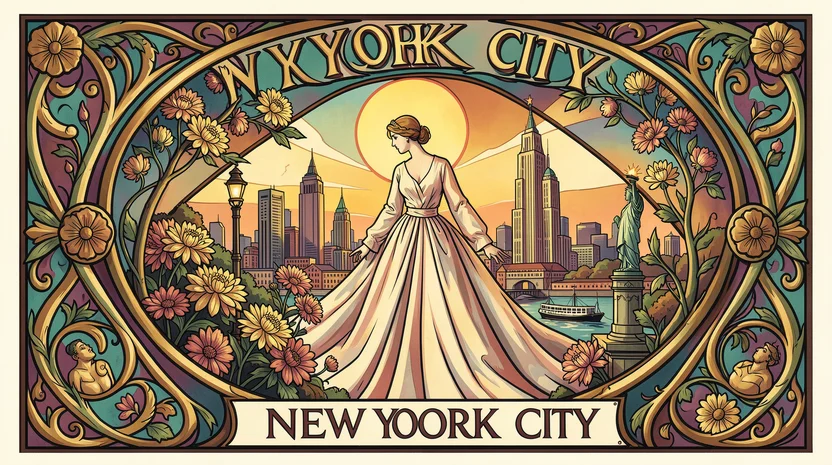
New York City
About this quiz
This quiz about New York City features 10 questions. It was generated by one of our users February 13, 2026.
The City That Never Sleeps
Welcome to the ultimate quiz about New York City – the dazzling metropolis that stands as one of the world's most iconic destinations! From its humble beginnings as a Dutch trading post called New Amsterdam in 1624 to becoming the bustling global powerhouse we know today, NYC has always been a beacon for dreamers, innovators, and adventurers. With over 8 million residents calling it home and millions more visiting each year, the Big Apple pulses with an energy unlike anywhere else on Earth.
Stretching across five distinct boroughs – Manhattan, Brooklyn, Queens, The Bronx, and Staten Island – New York City is a fascinating tapestry of cultures, languages, and experiences. Whether you're marveling at the towering skyscrapers of Midtown Manhattan, catching a Broadway show in the Theater District, or exploring the vibrant neighborhoods of Little Italy and Chinatown, there's always something extraordinary around every corner. From the Statue of Liberty welcoming visitors to its harbor to the neon-lit spectacle of Times Square, NYC has given the world countless unforgettable landmarks and moments.
Ready to test your knowledge about this incredible city? Our quiz will take you on a journey through New York's rich history, famous attractions, cultural treasures, and surprising facts that even longtime New Yorkers might not know. So grab a New York-style bagel, channel your inner taxi driver's confidence, and let's see how well you really know the city that never sleeps!
New York City: The Ultimate Study Guide
🏙️ Introduction
New York City stands as one of the world's most iconic metropolitan areas, serving as a global hub for finance, arts, fashion, and culture. From its Dutch colonial origins to its current status as "The City That Never Sleeps," NYC has continuously evolved while maintaining its position as America's most populous city.
📊 Population and Demographics
Which Borough Has the Largest Population?
Brooklyn is the most populous of NYC's five boroughs, with approximately 2.7 million residents as of recent estimates.
Population Rankings by Borough:
- Brooklyn (Kings County) - ~2.7 million
- Queens - ~2.4 million
- Manhattan - ~1.7 million
- The Bronx - ~1.5 million
- Staten Island - ~500,000
Total NYC Population
New York City's approximate population is 8.3 million people, making it the largest city in the United States. The greater metropolitan area houses over 20 million residents.
Key Population Facts:
- Most diverse city in the world
- Over 200 languages spoken
- Population density: ~27,000 people per square mile
- Attracts 65+ million tourists annually
🏛️ Historical Foundations
Original Dutch Settlement Name
New York City was originally called "New Amsterdam" when first settled by Dutch colonists in 1624.
Historical Timeline:
- 1624: Dutch establish New Amsterdam
- 1664: British capture the settlement
- 1664: Renamed "New York" after the Duke of York
- 1898: Five boroughs consolidate into modern NYC
Why "New Amsterdam"?
- Named after Amsterdam, the Dutch Republic's capital
- Established as a trading post by the Dutch West India Company
- Located on Manhattan Island (called "Manna-hata" by Native Americans)
🗽 Iconic Landmarks and Architecture
The Statue of Liberty: France's Gift to America
The Statue of Liberty was gifted by France to commemorate American independence and celebrate the centennial of the Declaration of Independence.
Statue of Liberty Facts:
- Official Name: "Liberty Enlightening the World"
- Gifted: 1886 (dedicated October 28)
- Designer: Frédéric Auguste Bartholdi
- Height: 305 feet (including pedestal)
- Symbolism: Freedom, democracy, and opportunity
The Chrysler Building: Art Deco Masterpiece
The Chrysler Building is primarily known for representing the Art Deco architectural style.
Art Deco Characteristics:
- Geometric patterns and clean lines
- Metallic finishes and ornate details
- Vertical emphasis with setback design
- Built: 1928-1930
- Height: 1,046 feet (77 stories)
🎭 Cultural Districts
Broadway: The Theater District
The famous theater district in Manhattan is called "Broadway" or the "Theater District."
Broadway District Features:
- Location: Times Square area (42nd to 54th Streets)
- Theaters: 41 professional theaters with 500+ seats
- Shows: Musicals, plays, and revivals
- Economic Impact: Billions in annual revenue
- Notable Venues: Majestic Theatre, Palace Theatre, Lyceum Theatre
Broadway Categories:
- Broadway: 500+ seat theaters in Theater District
- Off-Broadway: 100-499 seats
- Off-Off-Broadway: Under 100 seats
🌊 Geography and Waterways
Rivers and Waterways
The East River separates Manhattan from Brooklyn and Queens.
NYC's Major Waterways:
| Waterway | Separates | Notable Features |
|---|---|---|
| East River | Manhattan from Brooklyn/Queens | Brooklyn Bridge, Williamsburg Bridge |
| Hudson River | Manhattan from New Jersey | Hudson River Park, ferry routes |
| Harlem River | Manhattan from The Bronx | Multiple bridges and waterways |
East River Characteristics:
- Actually a tidal strait, not a true river
- Connects Upper and Lower New York Bay
- Important shipping and transportation route
💰 Financial District
Wall Street: The Financial Nickname
New York City's financial district is commonly nicknamed "Wall Street" or "The Financial District."
Wall Street Facts:
- Location: Lower Manhattan
- Name Origin: Dutch wall built in 1653 for protection
- Significance: Global financial center
- Key Institutions: NYSE, Federal Reserve Bank
- Economic Impact: Trillions in daily transactions
Major Financial Landmarks:
- New York Stock Exchange (NYSE)
- Federal Hall
- Trinity Church
- One World Trade Center
🌉 Engineering Marvels
Brooklyn Bridge: Historic Engineering Achievement
The Brooklyn Bridge was the world's longest suspension bridge when it opened in 1883.
Brooklyn Bridge Specifications:
- Length: 5,989 feet total; 1,595 feet main span
- Opened: May 24, 1883
- Designer: John Augustus Roebling
- Construction Time: 14 years
- Historic Significance: First steel-wire suspension bridge
Engineering Innovations:
- Revolutionary use of steel cables
- Pneumatic caissons for foundation work
- Gothic Revival stone towers
- Combined roadway for vehicles and pedestrians
🌳 Green Spaces and Parks
Parks and Recreation
Approximately 20-25% of New York City's land area is covered by parks and green spaces.
Major NYC Parks:
| Park | Borough | Size | Notable Features |
|---|---|---|---|
| Central Park | Manhattan | 843 acres | Reservoir, Zoo, Shakespeare in the Park |
| Prospect Park | Brooklyn | 526 acres | Lake, Bandshell, Brooklyn Museum nearby |
| Flushing Meadows | Queens | 897 acres | Unisphere, US Open Tennis |
| Van Cortlandt Park | Bronx | 1,146 acres | Golf course, nature trails |
| Staten Island Greenbelt | Staten Island | 2,800 acres | Hiking trails, nature preserve |
Green Space Benefits:
- Environmental: Air quality improvement, urban heat reduction
- Social: Recreation, community gathering spaces
- Economic: Property value increases, tourism revenue
- Health: Exercise opportunities, mental wellness
🎯 Quick Reference Summary
Essential NYC Facts at a Glance
| Category | Answer |
|---|---|
| Most Populous Borough | Brooklyn (~2.7 million) |
| Original Dutch Name | New Amsterdam (1624) |
| French Gift Landmark | Statue of Liberty (1886) |
| Theater District | Broadway/Theater District |
| River (Manhattan-Brooklyn/Queens) | East River |
| Financial District Nickname | Wall Street |
| Historic 1883 Bridge | Brooklyn Bridge |
| Total Population | ~8.3 million |
| Chrysler Building Style | Art Deco |
| Park Coverage | 20-25% of land area |
📚 Study Tips
Memory Techniques
- Acronym for Boroughs: "B-Q-M-B-S" (Brooklyn, Queens, Manhattan, Bronx, Staten Island)
- Historical Timeline: "New Amsterdam → New York" (Dutch → British)
- Bridge Memory: "1883 Brooklyn = First Steel Suspension"
- Art Deco: "Chrysler = Chrome and Geometry"
Key Themes to Remember
- Diversity: Population, culture, architecture
- Innovation: Engineering, finance, arts
- History: Colonial origins to modern metropolis
- Geography: Islands, rivers, bridges connecting communities
This comprehensive guide provides the foundation for understanding New York City's complexity, from its historical roots to its modern significance as a global metropolis.