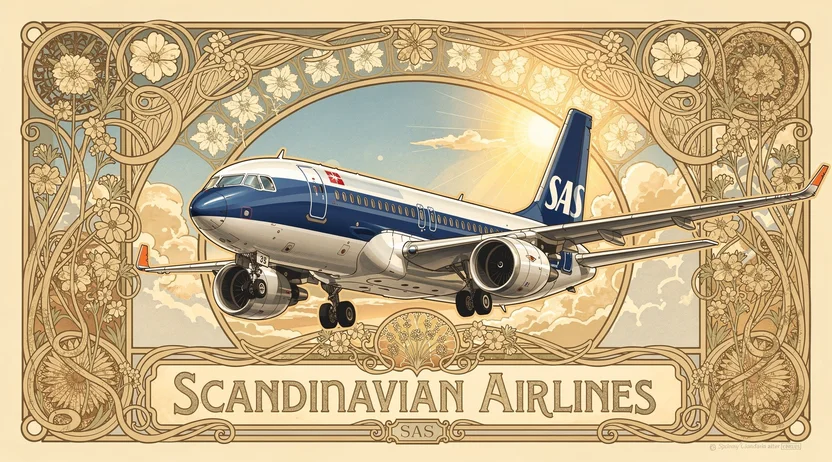
Scandinavian Airlines
Similar Quizzes
About this quiz
This quiz about Scandinavian Airlines features 10 questions. It was generated by one of our users February 22, 2026.
Prepare to take flight with a quiz that delves into the fascinating world of Scandinavian Airlines, often known by its acronym, SAS. More than just a carrier, SAS represents a remarkable story of cooperation and a commitment to connecting the Nordic region with the rest of the globe. Founded in 1946 as a joint venture between Sweden, Denmark, and Norway, it was born from a desire to create a unified airline that could compete on the international stage. This unique tripartite ownership has shaped its identity, fostering a rich heritage of Scandinavian design, service, and efficiency that continues to define the passenger experience today.
As you embark on this quiz, you'll discover the evolution of SAS, from its early days of transatlantic flights to its current status as a leading airline group. We'll explore its innovative spirit, its dedication to sustainability, and the iconic elements that make flying SAS a distinct pleasure. So, buckle up and get ready to test your knowledge on the airline that embodies the spirit of the North, showcasing its commitment to quality, comfort, and a truly global perspective.
Scandinavian Airlines (SAS): A Comprehensive Study
Scandinavian Airlines (SAS) is more than just an airline; it's a symbol of Scandinavian cooperation, innovation, and a commitment to providing a distinct travel experience. This study material will delve into the rich history, operational structure, strategic positioning, and unique characteristics that define SAS.
1. Introduction to Scandinavian Airlines (SAS)
- What is SAS? Scandinavian Airlines System (SAS) is the flag carrier of Denmark, Norway, and Sweden. It's a major European airline, renowned for its quality, reliability, and its role as a bridge between Scandinavia and the rest of the world.
- Mission & Vision: SAS aims to be the preferred airline for travelers in Scandinavia, offering a seamless and enjoyable travel experience with a focus on sustainability and innovation. Its vision often revolves around connecting people and cultures, while upholding Scandinavian values of efficiency and quality.
- Key Differentiators:
- Scandinavian Identity: A strong emphasis on Scandinavian design, service, and culture permeates all aspects of the passenger experience.
- Hubs: Strategically located hubs in Copenhagen (CPH), Oslo (OSL), and Stockholm (ARN) provide extensive network reach.
- Quality & Service: Historically known for its high service standards, comfortable cabins, and efficient operations.
- Sustainability Focus: A leading airline in environmental initiatives and sustainable aviation fuel (SAF) adoption.
2. History and Evolution of SAS
- Founding (1946): SAS was established as a consortium of national airlines from Denmark (DDL), Norway (DNL), and Sweden (ABA). This was a pioneering move in international airline cooperation.
- Early Years & Expansion: SAS quickly established itself as a pioneer, introducing the first jet services on the Transatlantic routes and the first polar route to Tokyo.
- The "Viking" Era: SAS developed a strong brand identity, often associated with Scandinavian heritage and a sense of adventure.
- Challenges and Restructuring: Like many legacy carriers, SAS has faced significant challenges, including intense competition from low-cost carriers, economic downturns, and the impact of global events (e.g., 9/11, financial crises, the COVID-19 pandemic). This has led to several restructuring efforts and strategic adjustments.
- Recent Developments: SAS has been undergoing significant transformation, including a recent Chapter 11 filing in the US (as of 2022) to restructure its debt and operations, aiming for a more financially sustainable future.
3. Corporate Structure and Ownership
- Consortium Model: While evolving, the core of SAS's ownership has historically been linked to the Scandinavian governments and private investors.
- Ownership Breakdown (General):
- Government Stakes: Denmark, Norway, and Sweden have historically held significant stakes, reflecting their status as flag carriers.
- Private Investors: A portion of ownership is typically held by private shareholders.
- Management Structure: A typical corporate hierarchy with a CEO, executive management team, and a board of directors responsible for strategic decision-making.
- Impact of Restructuring: Recent restructuring efforts have aimed to broaden the ownership base and secure new investment to ensure long-term viability.
4. Network and Operations
- Hubs:
- Copenhagen Airport (CPH), Denmark: The largest and busiest hub, serving as the primary gateway for international and domestic traffic.
- Oslo Airport (OSL), Norway: A major hub for Norwegian domestic and European operations.
- Stockholm Arlanda Airport (ARN), Sweden: The primary international airport for Sweden, crucial for both domestic and intercontinental routes.
- Fleet: SAS operates a modern and diverse fleet, typically comprising:
- Airbus A320 family (A319, A320, A321): For short-to-medium haul routes.
- Airbus A330 and A350: For long-haul, intercontinental services.
- Boeing 737 variants (historically and potentially in future agreements):
- Route Network:
- Scandinavia & Europe: Extensive domestic and intra-European coverage.
- North America: Key routes to major cities in the US and Canada.
- Asia: Important connections to major Asian destinations.
- Codeshare Agreements: SAS engages in strategic codeshare agreements with other airlines to expand its network reach and offer more travel options to its passengers.
- SAS Connect & SAS Link: SAS has established "SAS Connect" and "SAS Link" as its own low-cost subsidiaries to compete more effectively on certain routes and segments, often using regional aircraft.
5. Passenger Experience and Services
- Classes of Service:
- SAS Go: The standard economy class, offering comfortable seating and essential amenities.
- SAS Plus: A premium economy offering, featuring more legroom, enhanced meals, and priority services.
- SAS Business: The flagship business class, providing lie-flat seats, premium dining, and an exclusive lounge experience.
- Onboard Services:
- Wi-Fi: Available on most aircraft, often with tiered access.
- In-Flight Entertainment (IFE): A selection of movies, TV shows, and music.
- Dining: Varies by class and route, with a focus on Scandinavian flavors and quality ingredients.
- Lounges: SAS operates its own lounges at major hubs, offering a premium space for eligible passengers to relax, work, and dine before their flights.
- Loyalty Program: SAS EuroBonus:
- A comprehensive loyalty program allowing members to earn and redeem points for flights, upgrades, and other rewards.
- Tiered membership levels (Silver, Gold, Diamond) offer increasing benefits and privileges.
- Scandinavian Design & Ambiance: SAS is known for its understated yet sophisticated Scandinavian design, creating a calm and pleasant atmosphere onboard and in its lounges.
6. Strategy and Market Position
- Legacy Carrier with a Twist: SAS positions itself as a quality carrier, differentiating itself from pure low-cost airlines through superior service, network breadth, and a strong brand.
- Focus on Scandinavian Market: A deep understanding of the Scandinavian travel market and its specific needs.
- Sustainability Leadership: A significant strategic pillar, investing heavily in sustainable aviation fuels (SAF), modernizing its fleet, and reducing its environmental footprint. This is a key differentiator in attracting environmentally conscious travelers.
- Competition: Faces intense competition from:
- Low-Cost Carriers (LCCs): Ryanair, Norwegian (though its focus has shifted), Wizz Air, etc., on short-to-medium haul routes.
- Other Legacy Carriers: Lufthansa, KLM, British Airways, Air France, etc., on European and long-haul routes.
- Middle Eastern Carriers: On long-haul routes to Asia and beyond.
- Challenges:
- Cost Structure: Legacy carriers often have higher operating costs compared to LCCs.
- Geopolitical and Economic Factors: Sensitivity to economic downturns and global events.
- Maintaining Competitiveness: The need for continuous innovation and adaptation.
- Recent Strategic Shifts: The Chapter 11 process and subsequent restructuring are aimed at fundamentally improving SAS's financial health and long-term competitiveness. This includes potential new ownership structures and operational efficiencies.
7. Sustainability Initiatives
- Pioneering SAF Adoption: SAS has been a frontrunner in using and investing in Sustainable Aviation Fuels (SAF), aiming for a significant reduction in its carbon emissions.
- Fleet Modernization: Investing in fuel-efficient aircraft like the Airbus A320neo family and A350.
- Operational Efficiencies: Implementing measures to reduce fuel burn, such as optimized flight paths and weight management.
- Environmental Goals: Setting ambitious targets for reducing its environmental impact, aligning with broader climate goals.
- Customer Engagement: Educating passengers about its sustainability efforts and offering options for them to contribute.
8. Challenges and Future Outlook
- Post-Restructuring Landscape: The success of the ongoing restructuring will be critical for SAS's future. New ownership and operational models will shape its trajectory.
- Economic Volatility: The airline industry remains susceptible to economic fluctuations, fuel price volatility, and geopolitical events.
- Intensifying Competition: The need to continuously innovate and adapt to remain competitive against both LCCs and other network carriers.
- Technological Advancements: Embracing new technologies for operational efficiency, passenger experience, and sustainability.
- Long-Term Sustainability: Maintaining its commitment to sustainability will be crucial for its brand reputation and future growth.
9. Case Study/Discussion Points
- The Scandinavian Model: Analyze the strengths and weaknesses of the collaborative model of SAS compared to single-nation flag carriers.
- Sustainability as a Competitive Advantage: How effectively has SAS leveraged its sustainability initiatives to differentiate itself in the market?
- Restructuring and Survival: Discuss the strategic decisions SAS has made in its restructuring efforts and their potential impact on its future.
- The Future of Legacy Carriers: Is SAS's journey indicative of the broader challenges and opportunities facing traditional airlines in the 21st century?
- Impact of LCCs: How has the rise of low-cost carriers fundamentally altered the competitive landscape for airlines like SAS?
Conclusion
Scandinavian Airlines (SAS) is a compelling case study in the evolution of the airline industry. From its pioneering origins to its current strategic repositioning, SAS embodies a unique blend of Scandinavian heritage, operational excellence, and a forward-looking commitment to sustainability. Understanding its history, operational intricacies, and strategic challenges provides valuable insights into the dynamic world of aviation.
This study material is designed to be a starting point. Further research into SAS's financial reports, industry analyses, and news updates will provide a more in-depth understanding of this iconic airline.